We are back, once again, to the great month of May. The last of the winter visitors are nearly gone and the last of the summer migrants are arriving. And in this time of movement, just about anything can turn up. Here are five great birds to seek out during this month.
White Stork
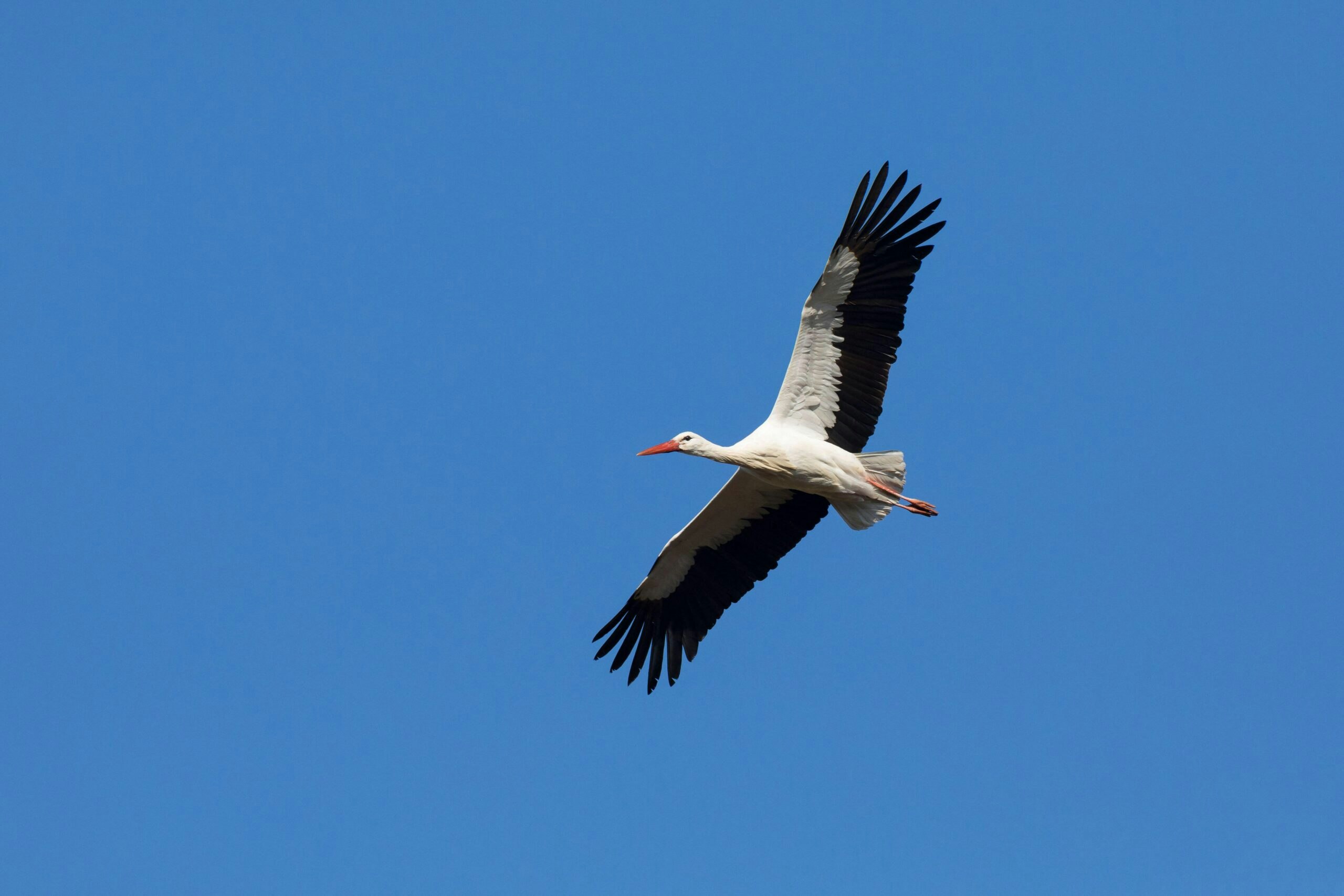
The massive, striking, iconic White Stork is essentially a widespread breeder across southern and central Europe. Wandering birds from the continent will reach the UK every year. But there are also birds which escape captivity each year and an ever increasing number of roaming wild bred birds from re-introduction schemes in south-east England. Incidentally, the last ‘natural’ breeding of storks in the country was in 1416. As big as a Crane but with a huge red bill and largely white plumage, apart from black flight feathers, they can sometimes be seen soaring on ‘good raptor days’, or they are found walking rough damp fields, searching for food. Check for rings, but it is, in any case, up to you whether you ‘tick’ a White Stork in the UK.
Nightingale
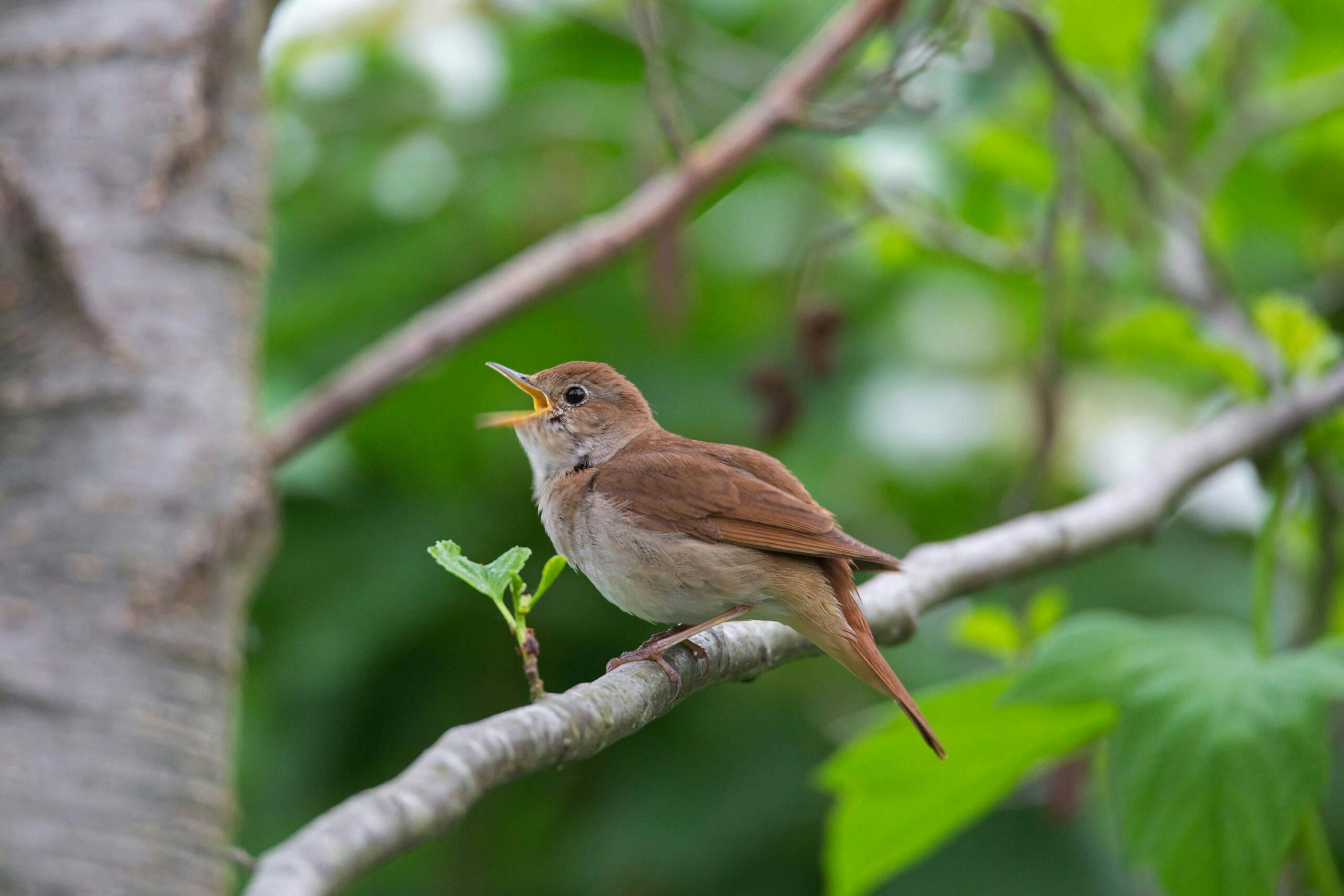
Like this month’s Bird of the Month the Spotted Flycatcher, the Nightingale has a bit of a reputation as an LBJ. This is slightly unfair as, despite its general lack of distinctive markings, it is quite a handsome bird. It is intermediate in size between a Robin and a Song Thrush, with a full, rufous tail, almost as striking as a Redstart’s tail. Of course, this is largely academic, as Nightingales can be very tough to get a good look at, as they sing from deep within dense cover, rarely showing well. Don’t listen to those who tell you that the Nightingale is an overrated singer, by the way – it most definitely is not! A virtuoso male on fine form creates a song of rich tone, diversity and power, and is a delight on the ears. Though heard best at night, they will also sing on and off throughout the day.
Common Sandpiper
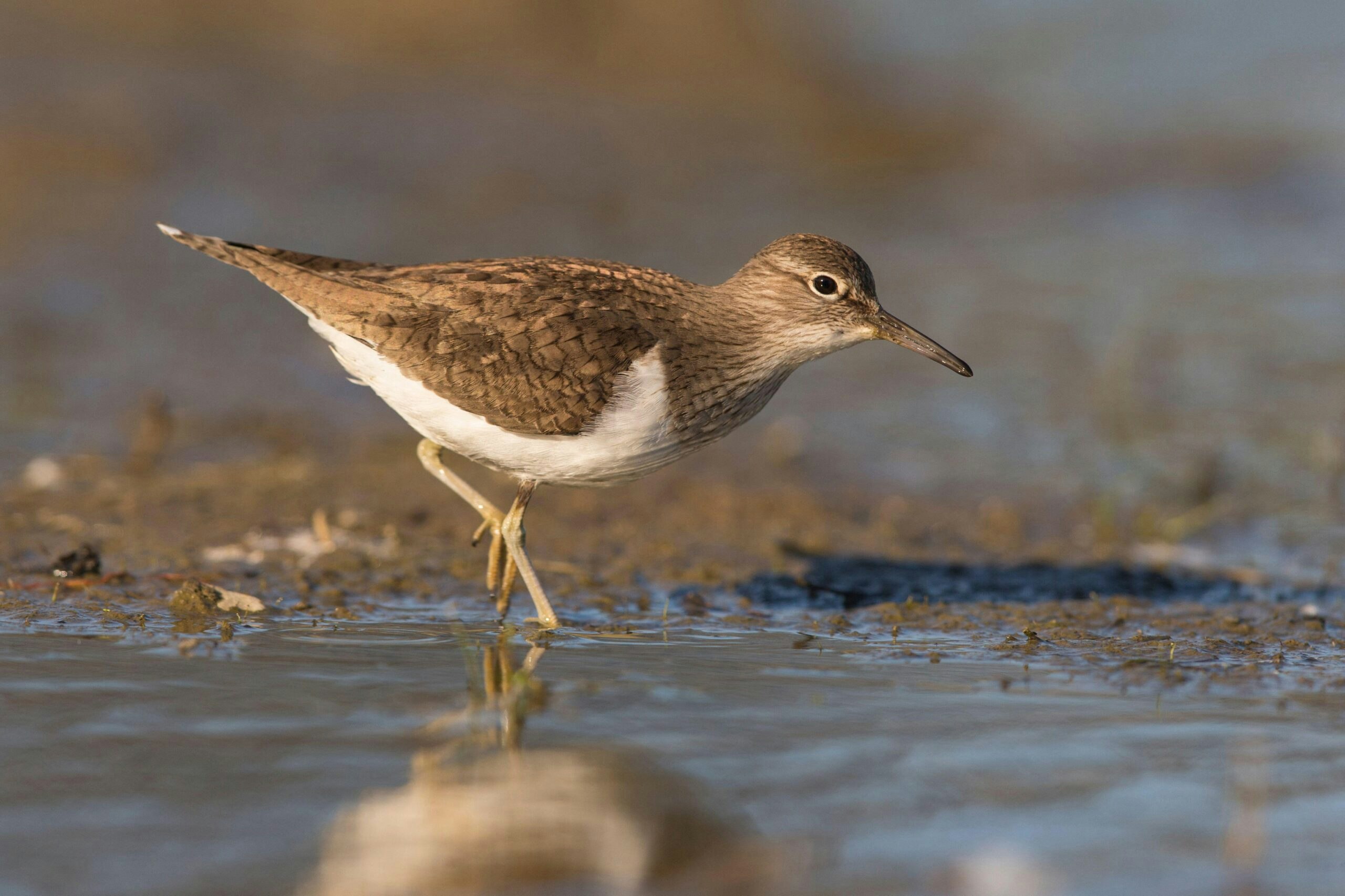
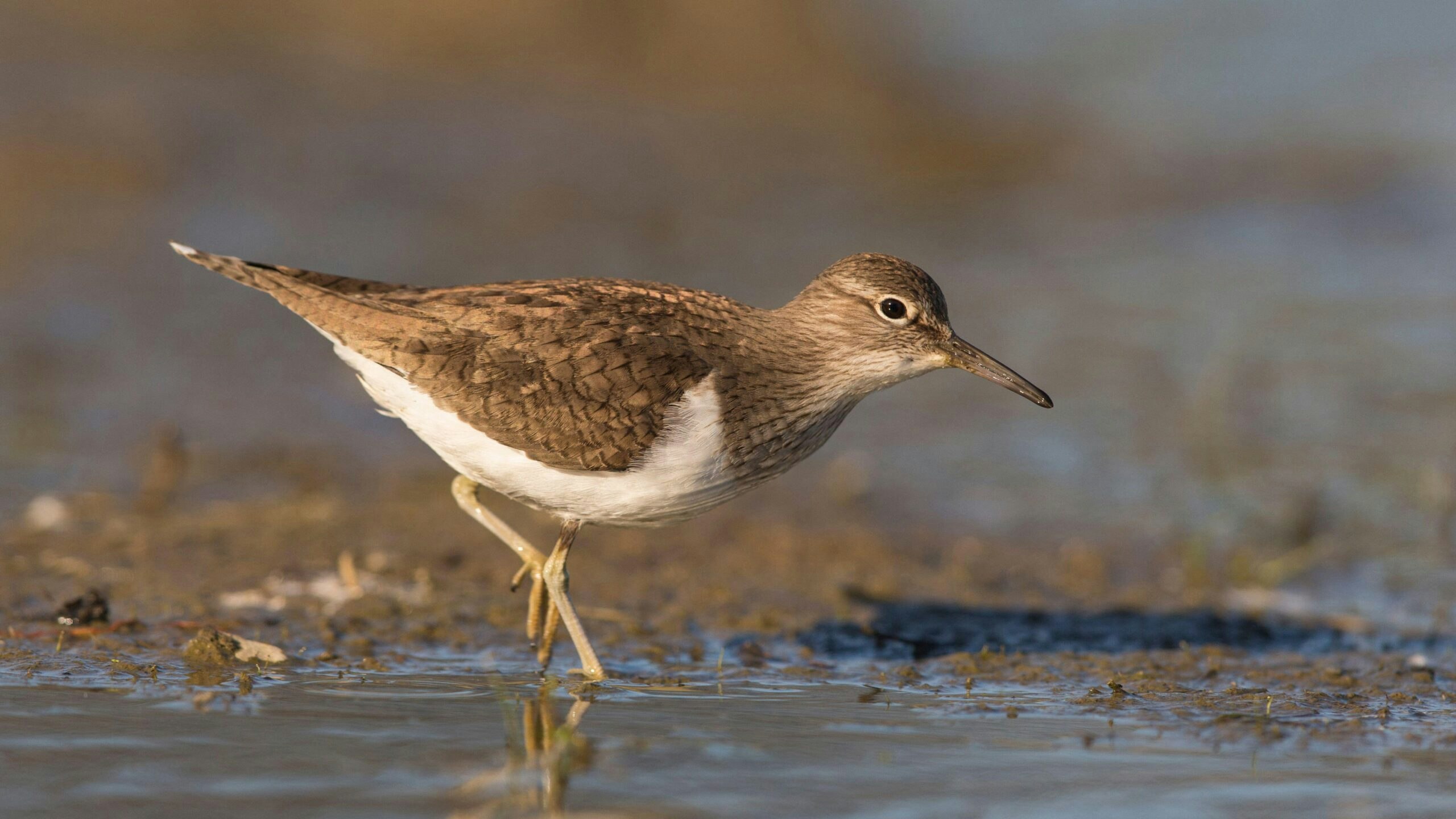
This underrated little wader is a moderately numerous breeding bird (at least for a wader) with about 15,000 nesting pairs, mostly in the north and west of the country. They nest alongside upland streams/rivers and lochs. It is quite a long tailed wader, constantly bobbing, with the tail extending notably beyond the wing tips, and it flies on distinctively bowed wings, low over the water. (note the dark rump, white wing-bar, and complex underwing pattern). On passage in April and May, they will turn up on the edges of gravel pits and the like, creeping along the edge to pick out flies and other invertebrates.
Cattle Egret
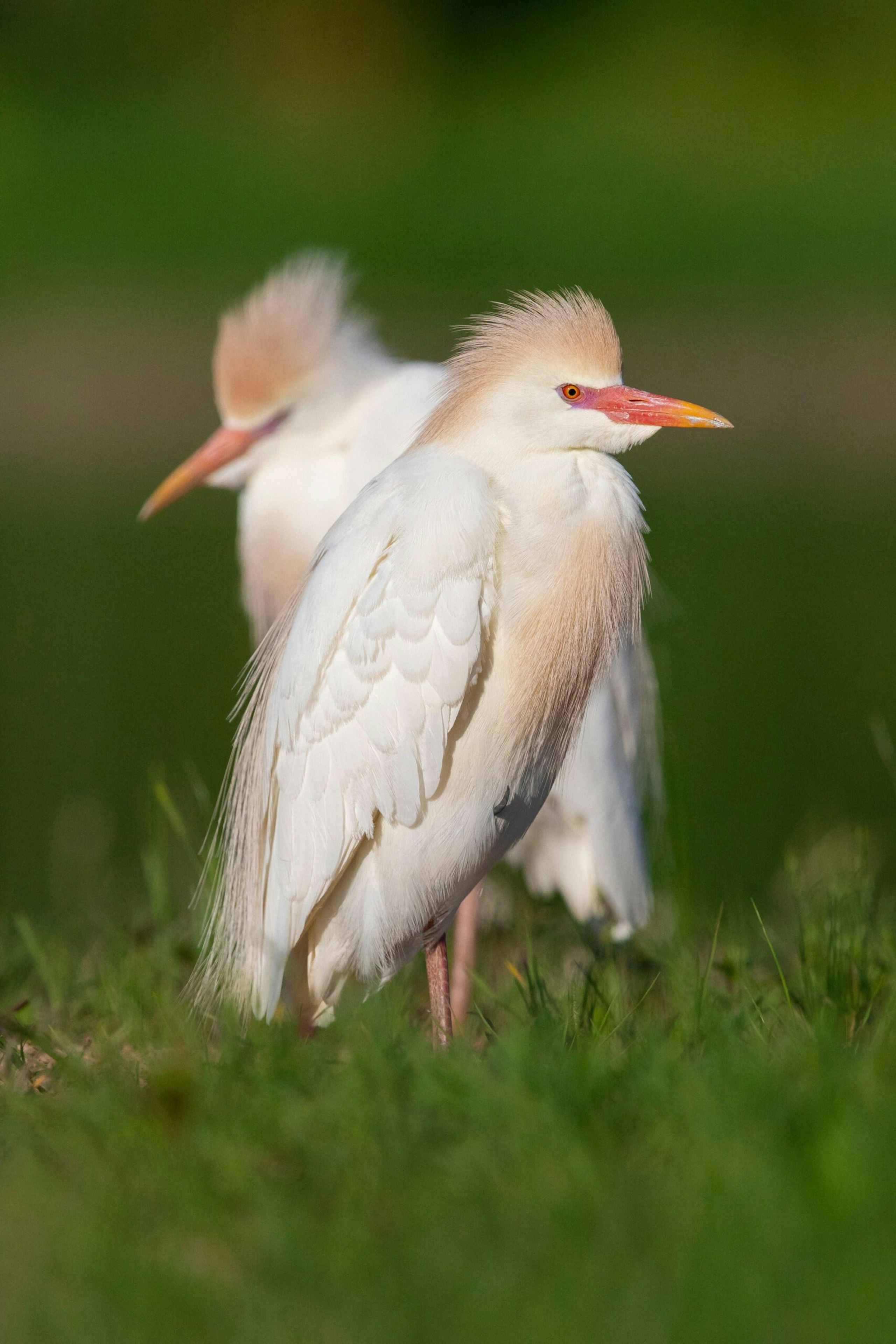
After breeding for the first time in the UK in 2008, Cattle Egrets have expanded their range somewhat. There are now possibly upwards of 100 pairs, mainly in southern England. In winter there are certainly hundreds if not thousands of individuals, with the largest flocks seen on the Somerset Levels – including nearly 700 recorded roosting at a single site. Mostly, these chunky, small egrets are largely white with perhaps a bit of pale orange feathering on the crown and perhaps on the back and breast. In full breeding condition, though, these colours become quite intense, and the crown develops a bit of an erectile crest, whit the bill and lores also become richly coloured. Look for birds looking at their finest, this month.
Montagu’s Harrier
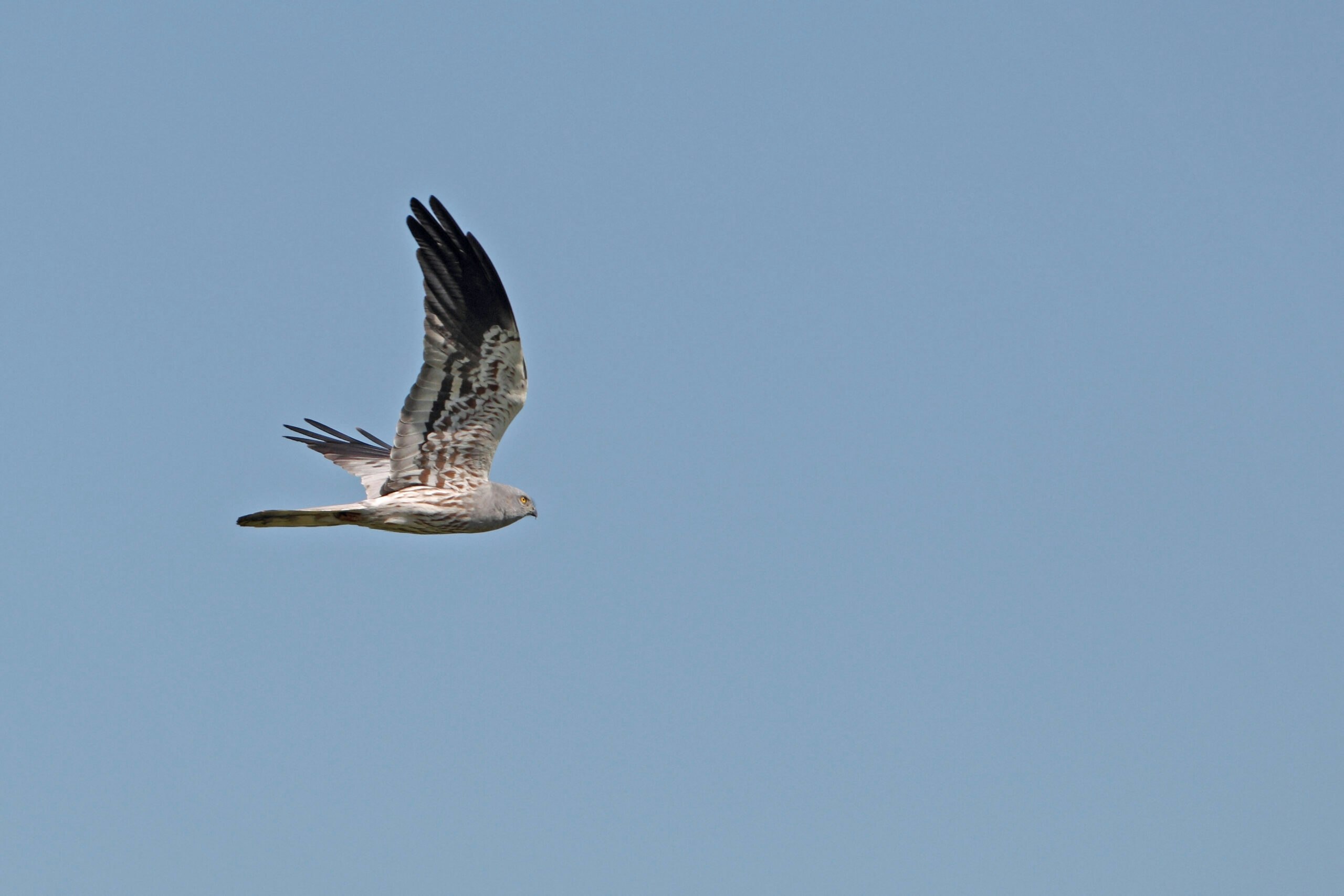
The little Montagu’s Harrier was apparently lost as a breeding species a few years ago. But last year, at least one pair bred in the country. Whether they are going to breed or not is still a mystery, but individuals will be seen passing through during May. Females are ‘ring tails’ looking like Hen Harriers, but considerably smaller and slimmer, with fewer prominent primary fingers. Males are smaller than females, looking almost tern-like in flight, and are a darker, more barred grey than male Hen Harriers. Keep an eye out over any open country.