These enormous storks are just one of Costa Rica’s many avian attractions, writes Ruth Miller
“Beware the Jabberwock, my son!” This line from Lewis Carroll’s nonsensical poem has been absorbed into popular culture as a warning against anything potentially formidable and threatening. As we cautiously approached two Jabiru storks feeding in a wet ditch, this bizarre poem ran through my mind. These birds were real not mythical, but although they weren’t threatening, they could definitely be called formidable.
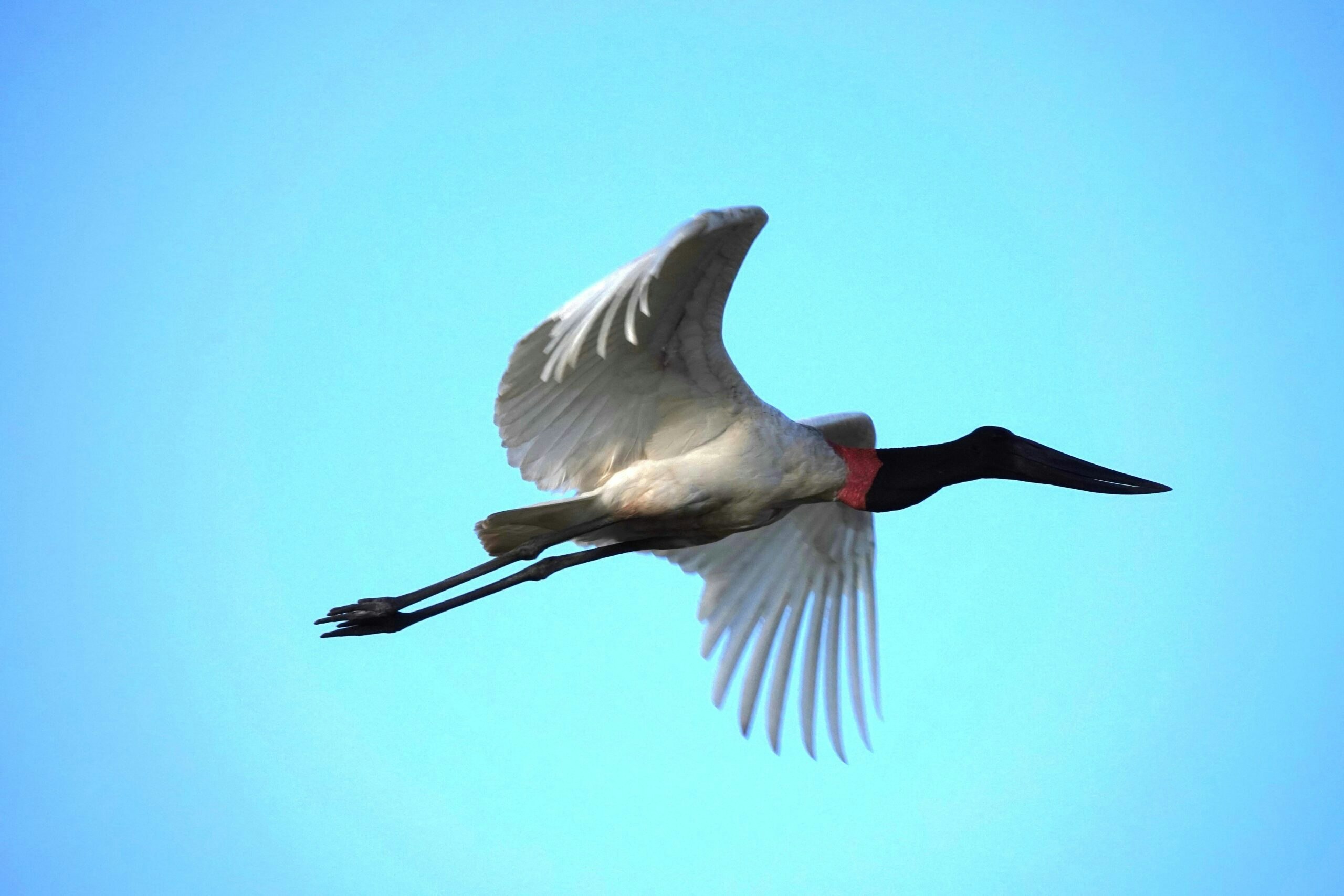
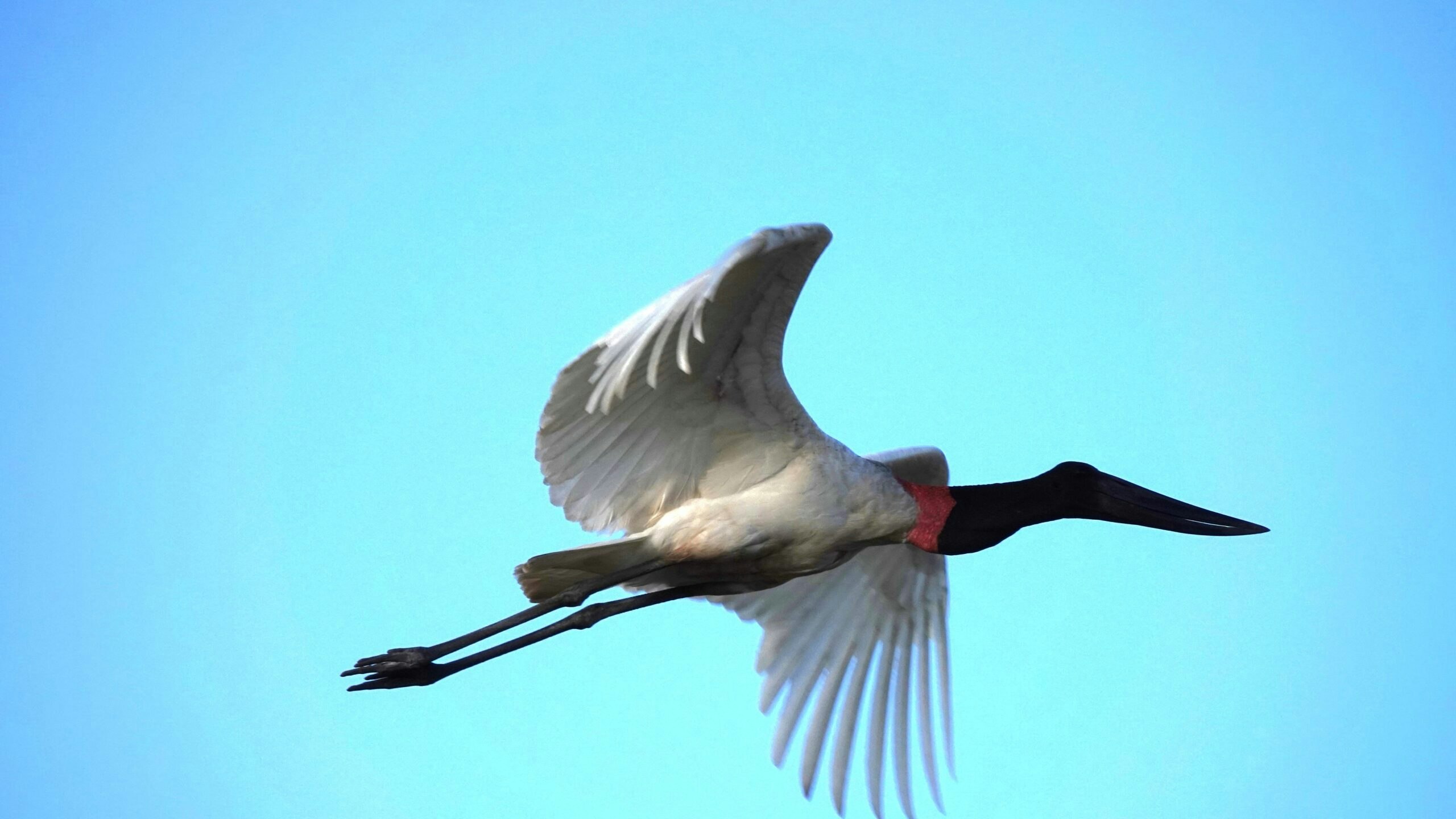
Everything about the Jabiru is impressive. A male bird can reach a lofty five feet tall and is the tallest flying bird in Central and Southern America with a wingspan of between seven to nine feet. Those big wings are necessary to get twenty pounds of Jabiru safely airborne. Even its bill is huge, measuring over a foot from its broad base to its sharp point. But if its vital statistics are remarkable, its looks are quite extraordinary. The Jabiru could be described as a cut-and-shunt bird, made up of spare parts from two different creatures joined at the neck. Its body and wings are covered in white feathers. Its face and neck however are black and bare, and joining the two is a section of featherless, stretchy red skin, looking like a scarf covering the join between body and neck. Its name Jabiru comes from the Indigenous Tupi-Guarani language meaning ‘swollen neck’ and if you were looking for inspiration for a mythical bird, you need look no further.
These fantastical creatures can be found in the Americas from Mexico down to Argentina. We were in Costa Rica staying at the fabulous Rancho Humo Estancia, a private estate and reserve in Guanacaste. The vast estancia is a working cattle ranch, and we saw several herds of grazing cattle being tended by gauchos on horseback, the most efficient mode of transport in this seasonal wetland. But the estancia is more than just a farm, it is also a protected nature reserve extending over more than 2640 acres. Heading out early from our wonderfully comfortable lodge that morning, we had enjoyed a boat ride on the broad Tempisque River where we relaxed on board and drifted past the plentiful wildlife. After a delicious light lunch back at the lodge followed by some downtime during the searing midday heat, we wandered out for an afternoon drive to explore the tracks and trails around the estancia.
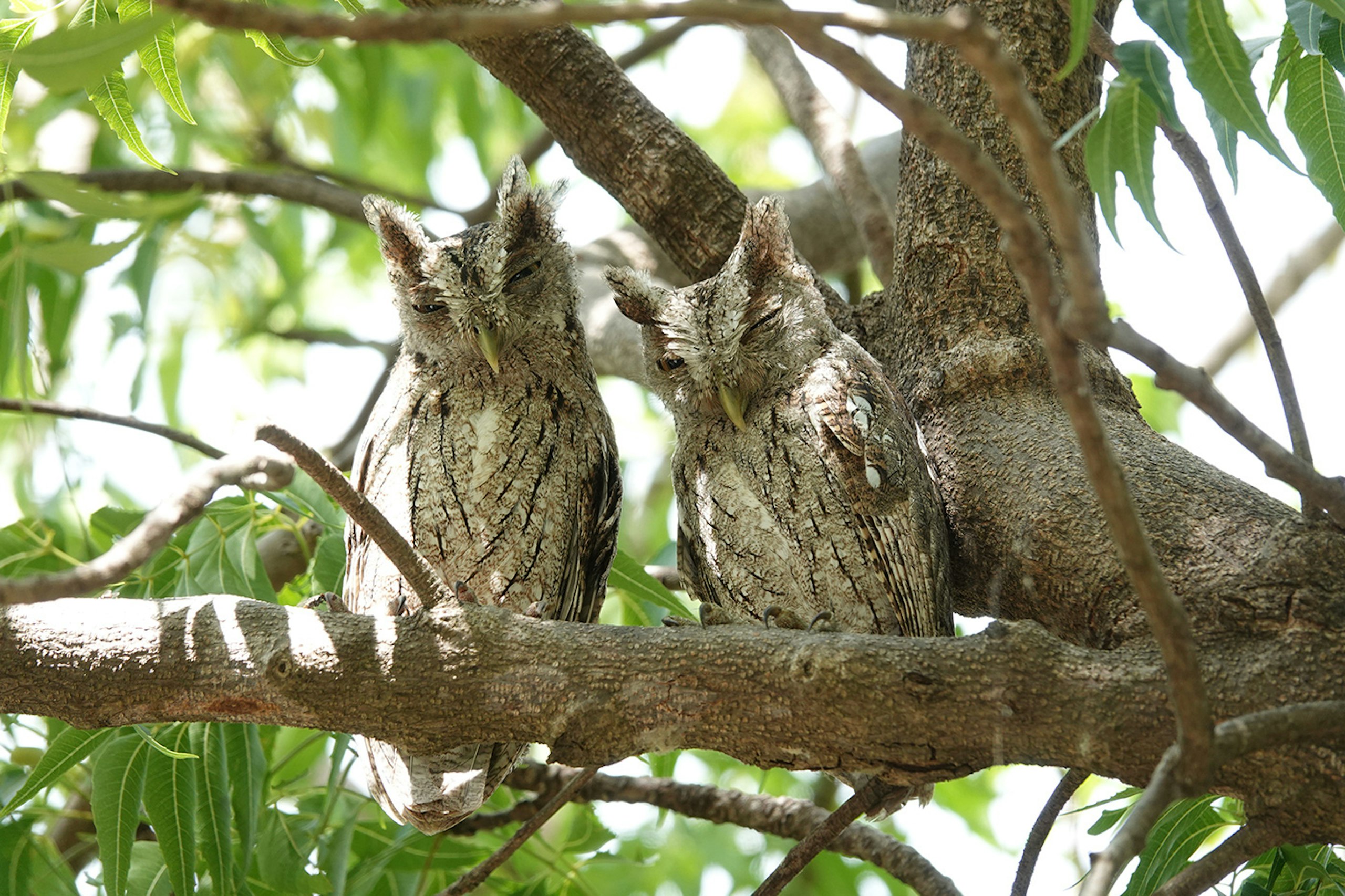
Great birds even before we left the lodge, as we spotted a pair of Pacific Screech Owls roosting in the depths of a shady tree beside the front door. Just around the corner in a grassy meadow, an Eastern Meadowlark appropriately perched up on a fallen log before disappearing into the long vegetation. Further down the track, the landscape opened up to provide extensive views across acres of grassland and scattered pools towards hazy mountains in the distance.
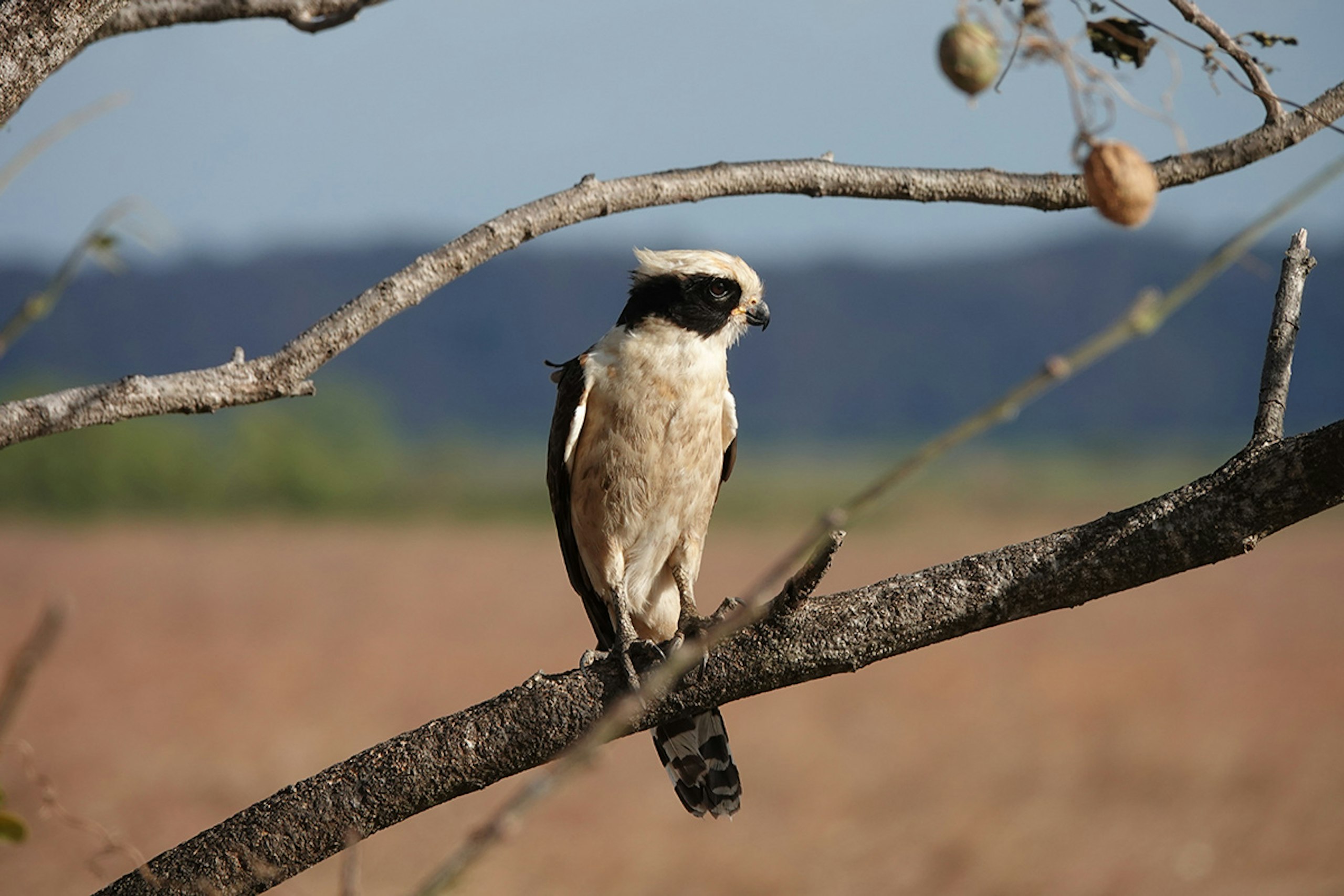
A straggly bush stood on lone sentry duty beside the track, and we could see a pale bird with a dark Zorro mask perched on a low horizonal branch. Checking at a distance with the binoculars we identified it as a Laughing Falcon, a distinctive bird named for its cackling call. The track passed its tree, so we had no option but to continue towards the bird who was quite happy to sit on its branch until we were almost close enough to touch it.
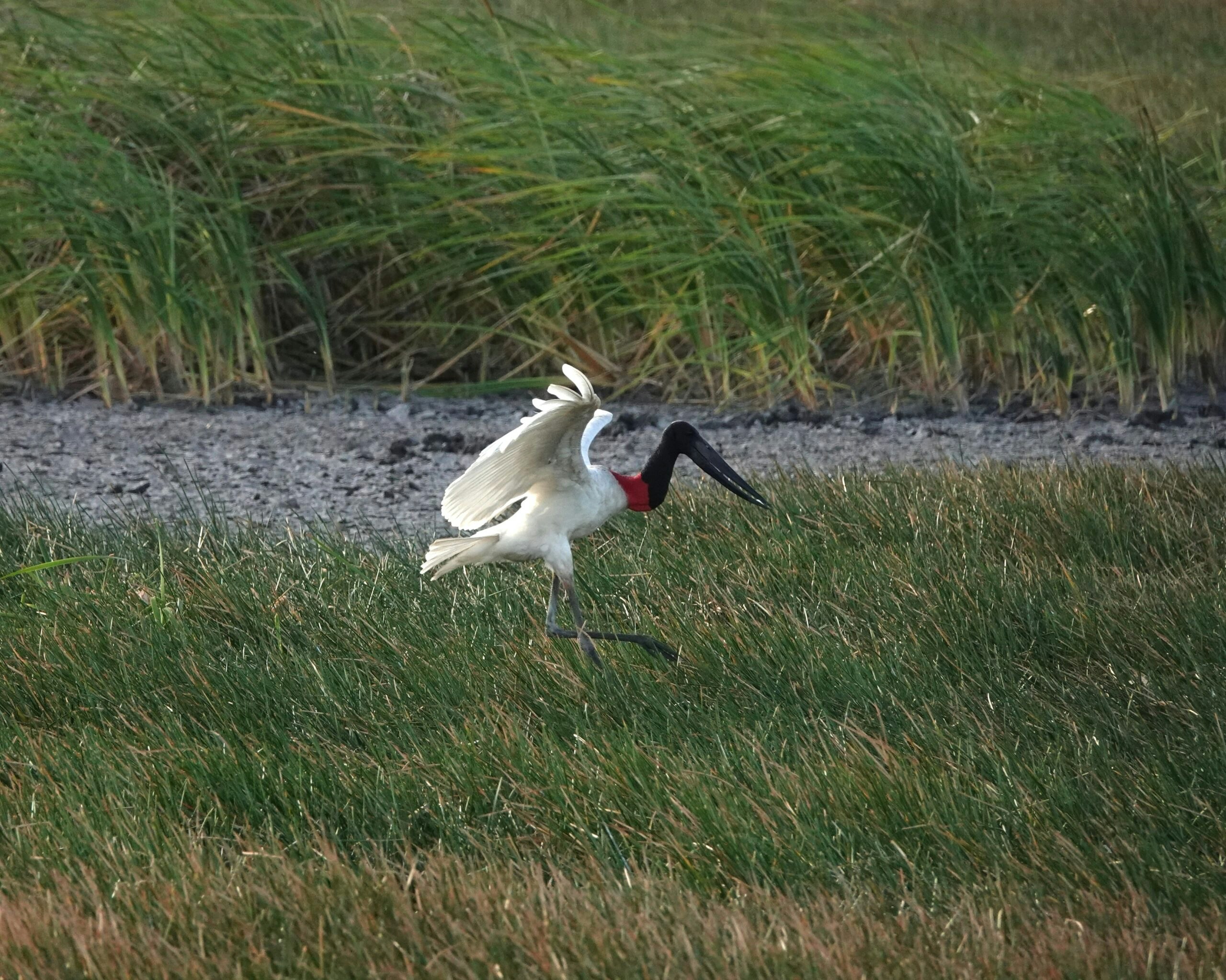
This is a seasonal wetland, and we were visiting in the dry season, so the water had contracted leaving grassland for the cattle dotted with a few remaining pools and channels where the water birds gathered. A group of Wood Storks congregated by one of these shrinking pools, large birds in their own right but suddenly looking inconsequential when a massive new white bird slowly flapped into view. An enormous creature with its huge black neck and bill extending in front and its long black legs trailing behind, this giant Jabiru was in another league entirely. It landed briefly creating a handy comparison with the Wood Storks before lifting off again, flying for all its enormous size with great elegance once airborne. It didn’t go far though before dropping down into a narrow channel close to the track. We stopped the truck and decided to follow on foot in the hope of a better look. Using the scrubby bushes lining the channel as cover, we tiptoed into a position where we could peer over them into the ditch and were rewarded with excellent views of not just one but two Jabiru, perhaps a pair as these birds usually mate for life. Close up, we could really study their bizarre bare necks and the slightly floppy, stretchy red ‘scarf’ in contrast to their creamy white plumage. What odd characters. The retreating waters caused concentration amongst the fish and frogs as well as their predators, and the Jabiru were clearly finding plenty to eat here, a real treat for us to watch though clearly less so for their rapidly disappearing prey.
Having taken our fill of these wonderful Jabiru, we tiptoed back to the truck and continued on our way, leaving the birds to enjoy their feast. We drove further round the estancia enjoying splendid views of numerous Great and Snowy Egrets, Black-necked Stilts, and Northern Jacana in more muddy pools. As we returned to the area of tropical dry forest closer to the lodge, we were treated to brief but close views of a Lesser Ground Cuckoo which skulked amongst the scrubby vegetation, what a delight to see this elusive bird. And in an open field we noticed two Double-striped Thick-knees, statuesque birds looking like our Stone Curlews in the UK as they roosted motionless in the sunshine waiting for the chance to feed when dusk fell.
What an incredible excursion and what a raft of amazing birds. Rancho Humo truly delivered both by boat and by land with a fabulous list of birds enjoyed, but for me, nothing could quite beat a close encounter with a five-foot Jabiru or two!Laughing Falcon