£1,699
Reviewed by David Chandler
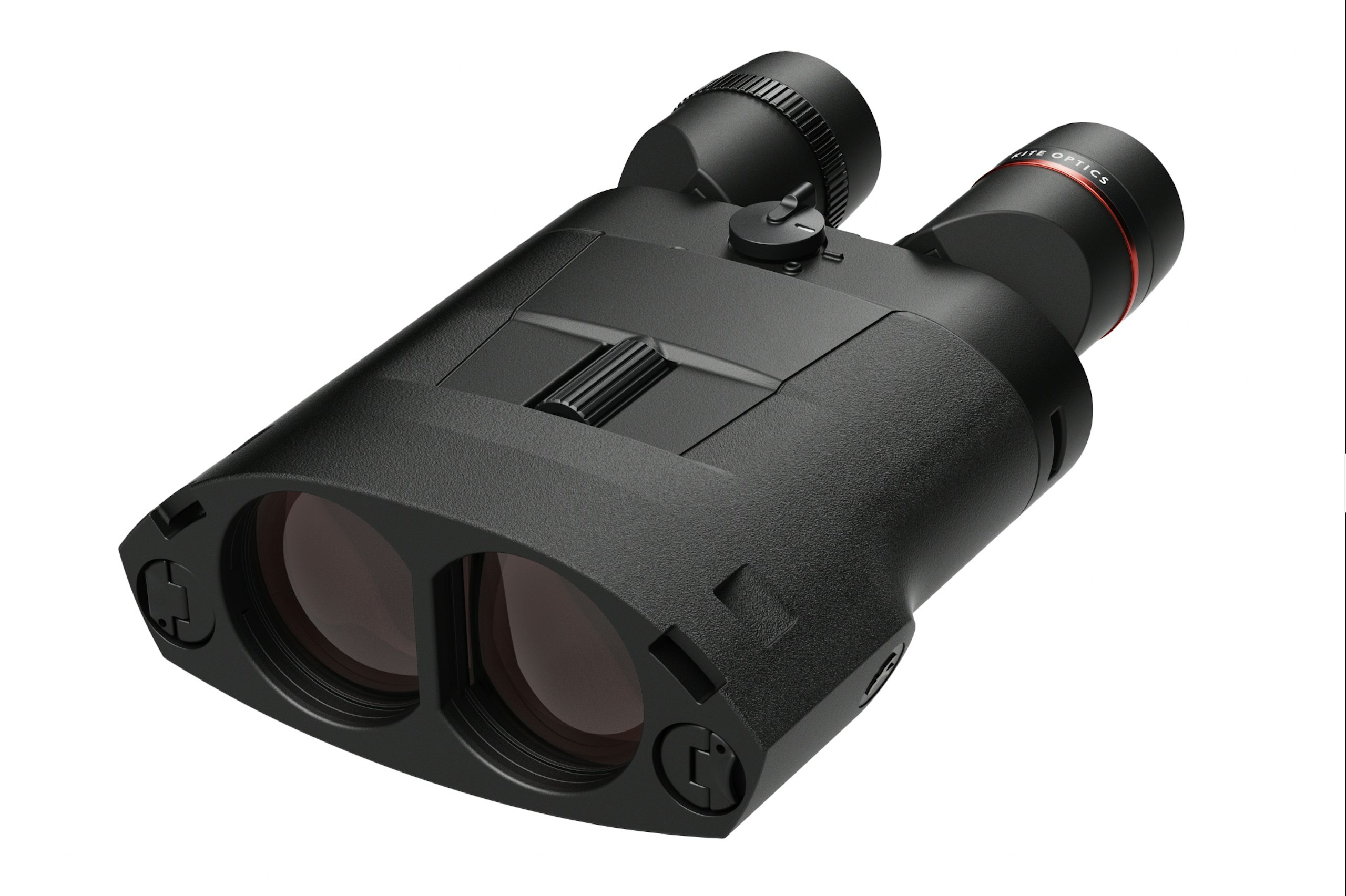
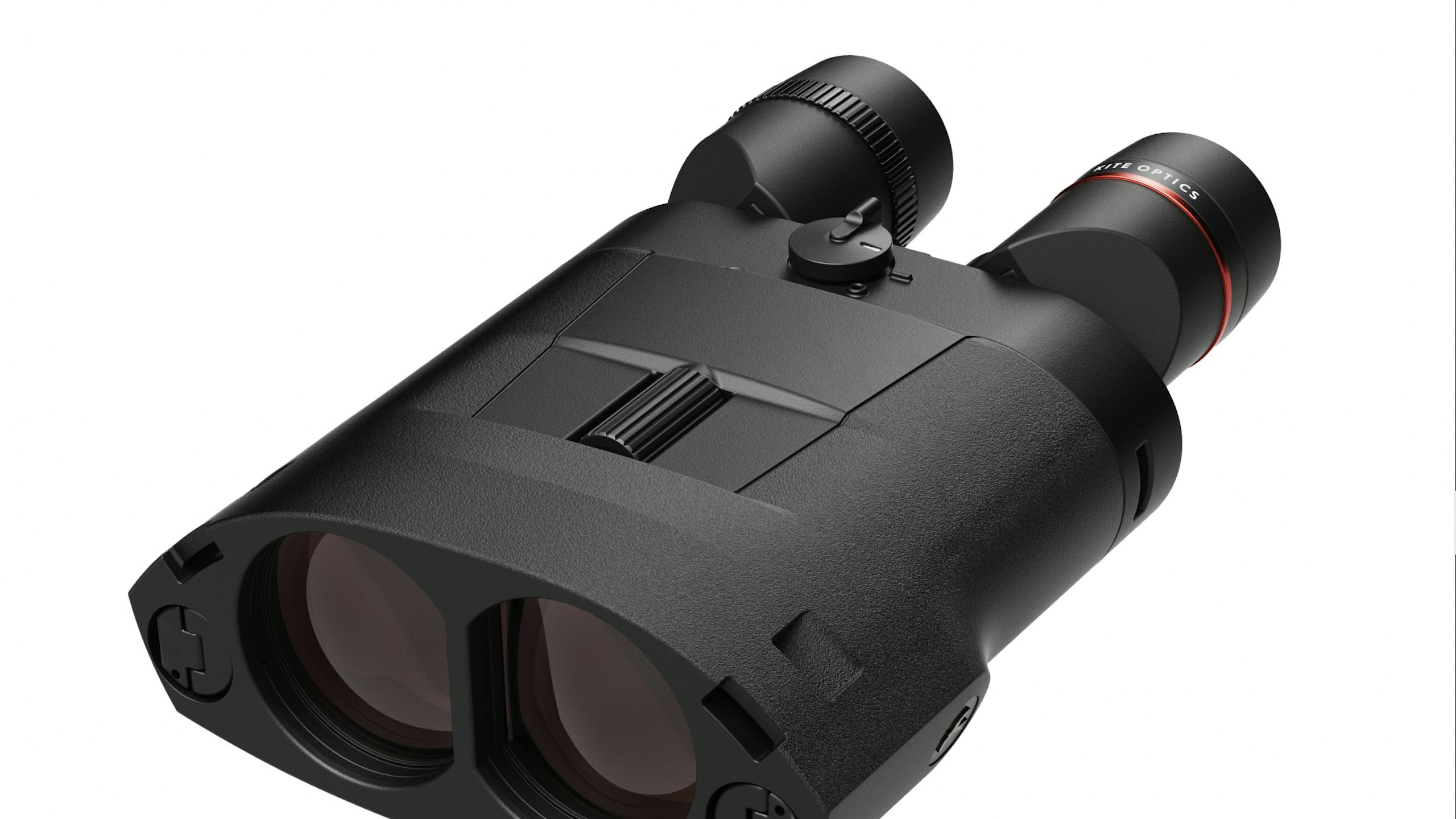
This new, flagship binocular from Kite has more magnification than any other stabilised binocular to date – a magnification “once considered impossible”. It delivers “spotting-scope-detail in handheld binoculars”, which means spotting scope detail without the tripod. It was developed in Belgium and made in Japan. But how well does it work and who is it for?

Very stable
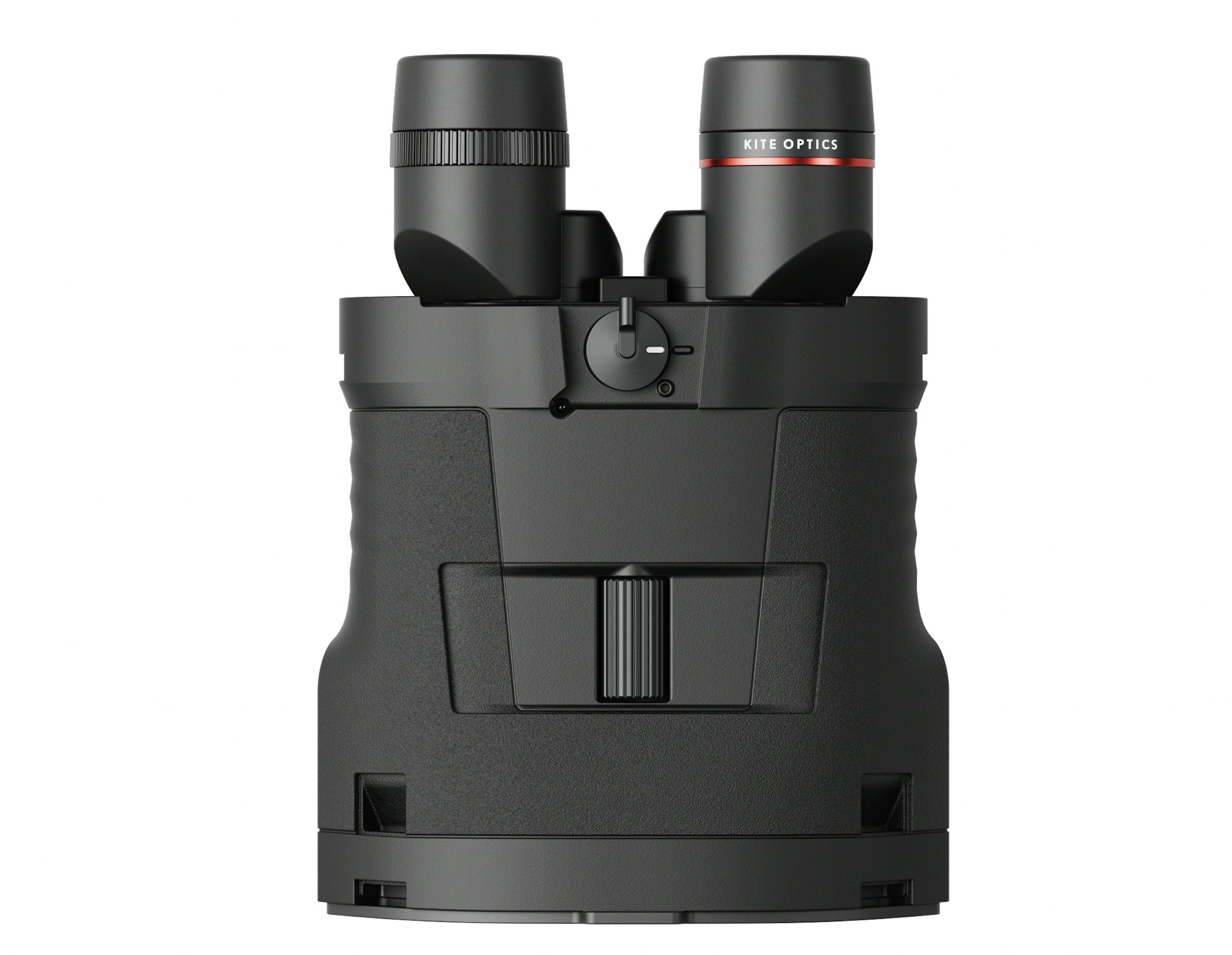
The image stabilisation (IS) is very impressive – I really could get a stable view from a handheld 22x binocular. It does that by correcting up to 2° of movement and even improved things when I rested my arms on a gate for support. I could even use this binocular held in just one hand. Switching the IS on and off is very easy – I just pushed or pulled the rotating switch with my left forefinger.
Power is provided by two AA batteries, with ‘Angle Power Control’ (APC) putting the binocular into sleep mode when it’s lowered. Alkaline batteries are good for up to 38 hours of viewing; lithium batteries provide up to 70 hours (there is a low battery indicator). Note that rechargeable batteries should not be used – they don’t deliver enough voltage. Each battery sits in its own compartment, one by each objective lens. I found the compartment covers fiddly to screw in, but you won’t be doing that too often. Batteries are not part of the package. For ease of use, leave the IS on and let the APC do its job.
Some people experience feelings similar to motion sickness when using stabilised binoculars/scopes. If that’s you, try not switching the IS on until the binocular is on the bird. With use, those motion sickness feelings may diminish.
Handling
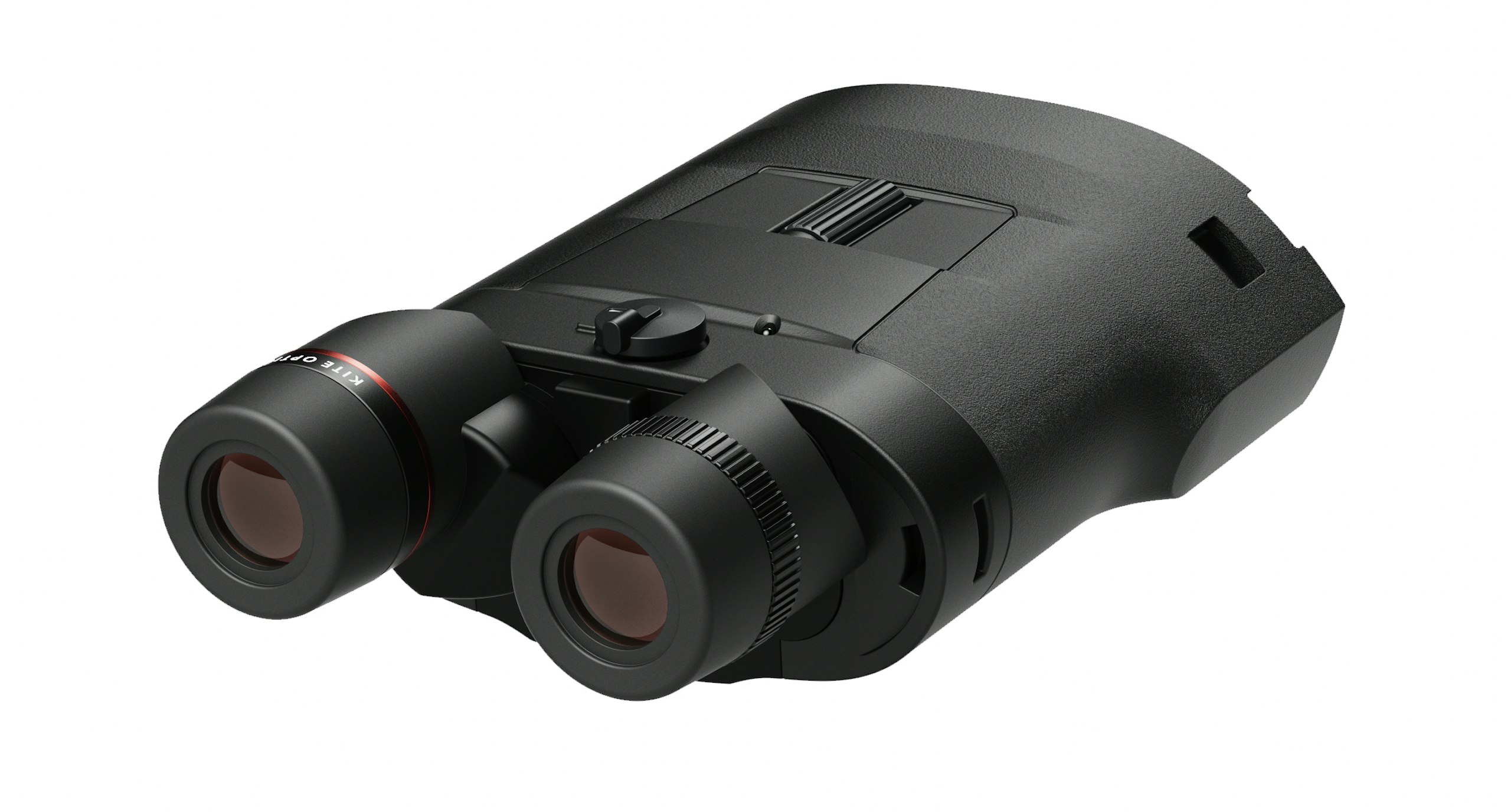
It weighs a bit more than a kilo but my initial reaction was that it didn’t feel too heavy. A broad, neoprene strap is part of the package and helps to spread the load. I didn’t find it too tiring to hold, but my arms did begin to feel the weight with more prolonged viewing. It’s a slightly front-heavy binocular (not an issue) and is a different shape from a conventional binocular. It does feel different in the hands, but is comfortable enough to hold, and my fingers found the focusing wheel easily. My hands aren’t huge or small – anyone with small hands would find this binocular difficult to manage, though.
This Kite is IPX7 waterproof, gas-filled, armoured and seems well put together. The two-finger-wide focuser moves smoothly with moderate resistance, through about two anti-clockwise revolutions towards more distant birds. In real-world birding use, a bit more than half a turn will cover it. Finding the best focus wasn’t always easy. The sharpness is there, but the gentlest of focus touches may be needed to find it. With more practice, this may get easier.
The rubber-covered eyecups have a good, quite light action and two intermediate positions – I used them fully extended and they stayed in position. The dioptre adjusts with a simple, stiff-moving, twist ring. I spent a lot more time than I normally would trying to find the best setting – be prepared to take your time with this if you try or buy this binocular.
One benefit that I hadn’t anticipated was how good this binocular is for following a bird in flight – a Hobby, for example. Try doing that with a scope on a tripod. And, with 22x magnification, I was able to identify a Buzzard approximately 1.5 miles away.
Optics
The image is good, with very good sharpness (excellent at distance), good brightness and good colours. When I looked for it, I found a bit of edge softness, but as usual, nothing problematic, and, at close ranges in particular, the view sometimes seemed slightly misty. With such a high magnification you might expect the view to feel narrow – it doesn’t. The apparent field of view is about 68°, which is very wide. I did see a bit of colour-fringing, including on an in-flight Hobby and Marsh Harrier. Tweaking my eye position might have improved that – smaller exit pupils on a binocular (2.3mm in this case) make it harder to get your eye position right. This is not a binocular designed for close viewing – its quoted close-focus is 5.5m; I measured it as 4.36m. Its low light performance was better than anticipated. With 10% cloud cover at the end of a sunny day, this handheld scope alternative did well in close shade 20 minutes after sunset, and still revealed some detail 10 minutes later. In distant, open viewing, the view was still good, with some colour differentiation, 30 minutes after the sun’s bedtime.
Specs
Length: 210 x 150mm
Weight: 1,020g (without batteries)Field of view: 54m@1,000mClose focus: 5.5mEye relief: 16.3mm
Warranty: 30yr, including electronics
Supplied with: soft, padded case; objective cover; rainguard; broad, neoprene strap; hand strap.
Website: kiteoptics.com
Verdict
This isn’t a general-purpose birdwatching binocular. It’s at its best as a tool for distant viewing, a slow use, gentle touch binocular, an alternative to a scope and tripod, for seawatching, far-away raptor viewing, or scanning expansive mudflats, for example. You can try it for yourself on the Kite stand at this year’s Global Birdfair, or at one of Kite’s dealers (contact them first to make sure they have it in stock).