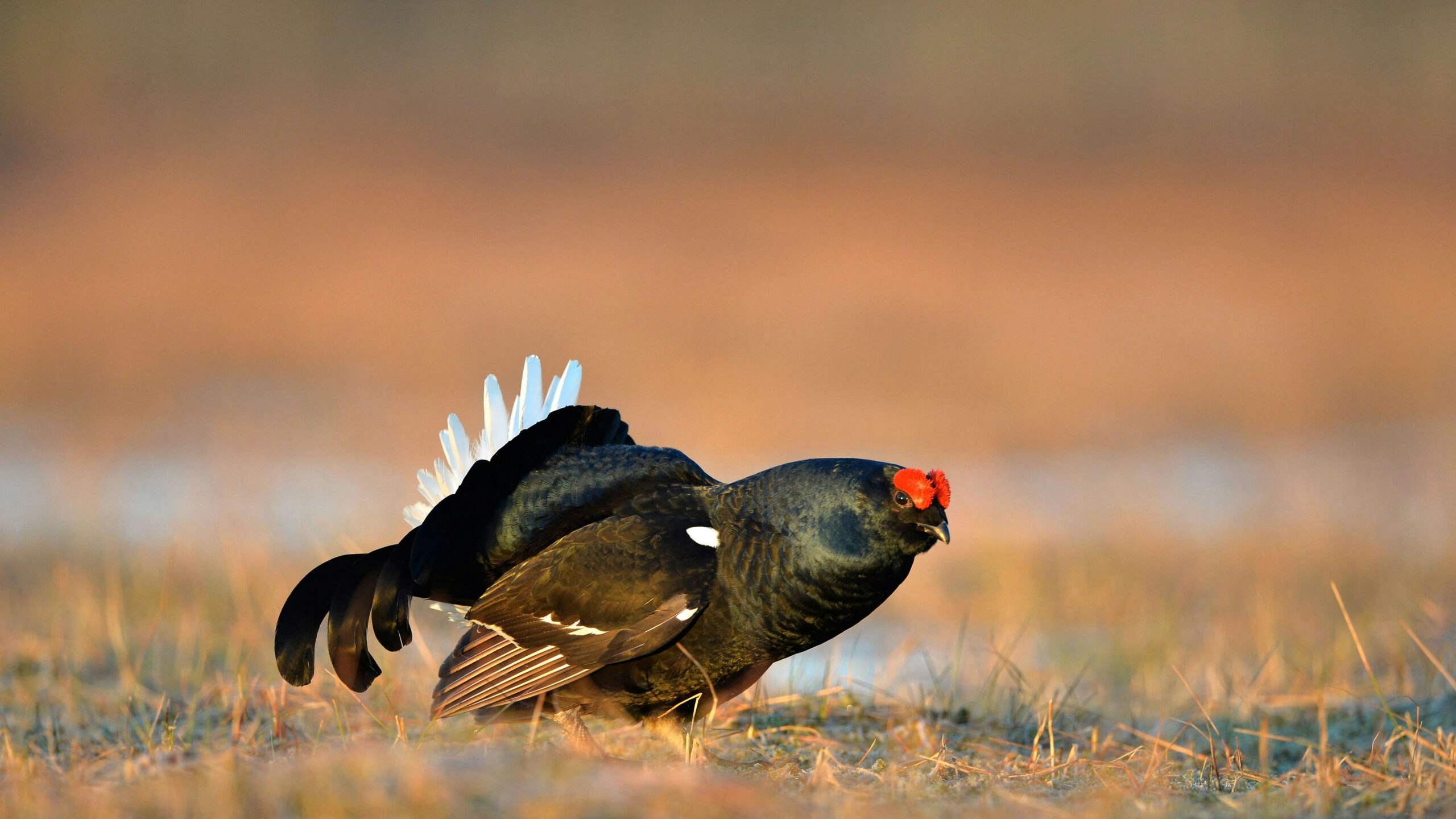
Can translocation help the Black Grouse bounce back? John Miles investigates…
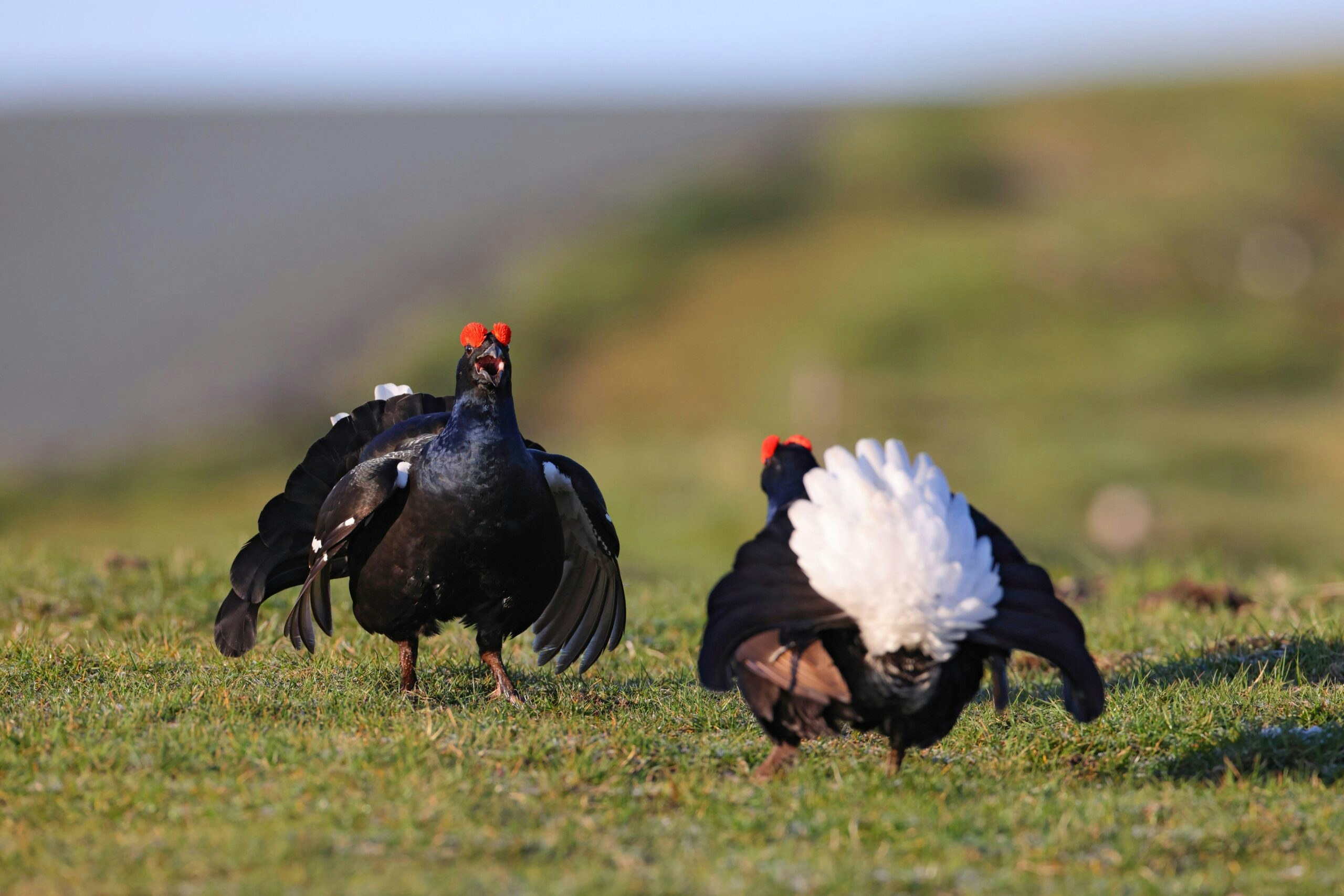
Last year was notable for some good news about one of our fastest declining birds, the Black Grouse, with breeding taking place in an area of England where the bird had not bred since the 1840s.
Thanks to the work of Phil Warren and Holly Appleby, working for the Game & Wildlife Conservation Trust, and staff on several estates, Black Grouse bred in their first year of introduction, producing 12 chicks.
The long-term project is funded by £164,000 from Natural England’s Species Recovery Programme, £30,000 from the BASC Wildlife Fund, and donations through a Black Grouse appeal. It aims to safeguard Black Grouse against the potential negative impacts of climate change, through instigating measures to help increase breeding success, and by expanding the current range of Black Grouse into the North York Moors using a conservation translocation
In the winter of 2024-25, 10 male Black Grouse (sometimes known as blackcock) and 10 female grouse (greyhens) were caught at night using spotlights under a new moon on the Raby estate in County Durham. This estate has been a stronghold for the species for many years, with the B6277 between Alston in Cumbria and Middleton in Teesdale one of the best roads in Britain to view this species. A prime location is Langdon Beck, where several display grounds, or leks, can be seen, and feeding areas include the rich wild flower meadows that are part of the National Landscape area of the North Pennines protected area.
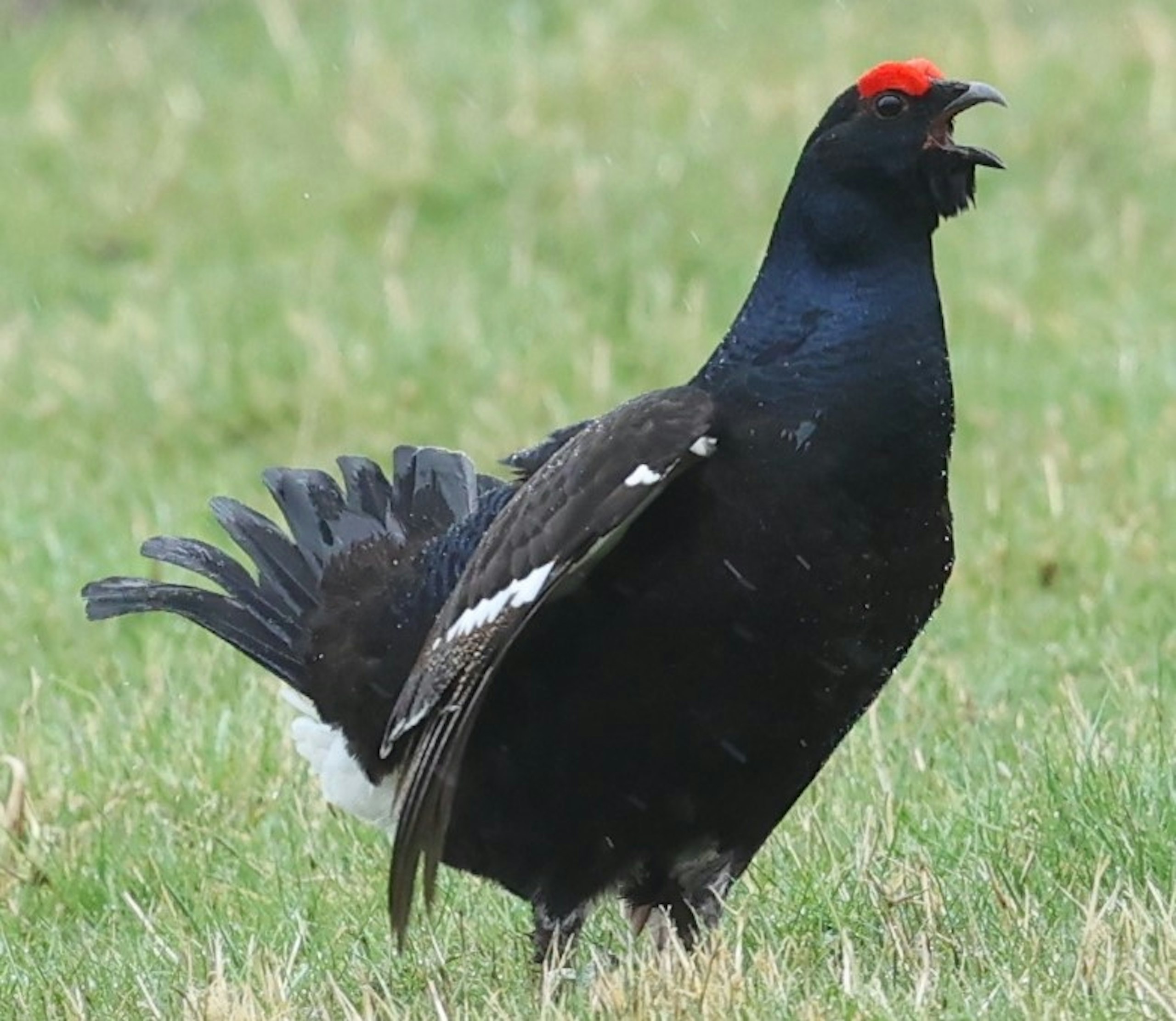
These 20 birds were not in captivity for very long, as they were released the next day on the Rosedale and Westerdale Estates, two large estates on the North York Moors, owned by David Ross, the founder of Carphone Warehouse. Both estates are managed as Red Grouse moors with farmland, and over the years new habitat has been added so that the Black Grouse will have a better chance of surviving.
Phil Warren said: “All 10 females were fitted with GPS-GSM tags, funded by a Farming in Protected Landscapes (North York Moors) grant, to allow us to remotely follow their settlement patterns, and identify breeding and nesting sites. Results from the initial translocation have been very promising. Of the 10 males and 10 females moved last year, eight males and eight females were fitted with VHF radio tags and followed. The seven tagged males present in the spring established leks in and around the area where they had been released, where they displayed to attract females and encourage them to mate.
“The seven tagged females around in the spring nested, with five nests hatching and two being abandoned. Four of the five females that hatched chicks fledged broods of one, two, four and five chicks. We have translocated a further 20 Black Grouse to the North York Moors to bolster the 20 birds released last October. Black Grouse have had an excellent breeding year at donor sites in the North Pennines, meaning that a small surplus could be moved.”
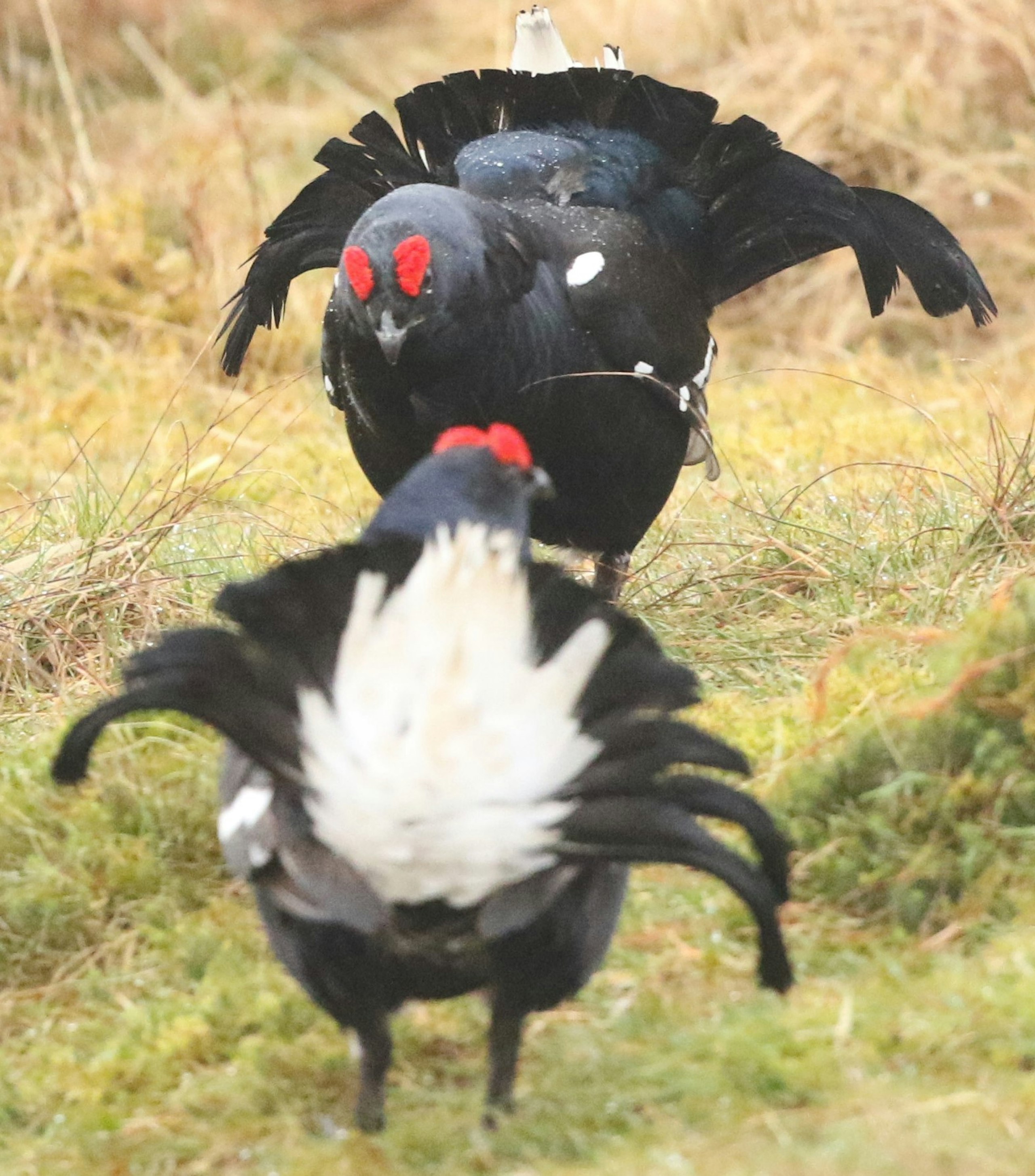
Black Grouse have been on these islands since the last Ice Age, and would once have been found around most of Britain. Exceptional numbers of their bones were found at the famous Roman camp of Vindolanda, next to Hadrian's Wall in Northumberland, so many so that archaeologists actually found that they outnumbered chicken bones, suggesting this grouse was common food for the troops.
Later, the grouse were also slaughtered in great numbers, not just by estates but by farmers, as they were often found feeding on the stooks in oat fields left out to dry. They were classed as a pest species for this alone, but also made good eating.
Historically, as the Red Grouse became the bird that the estates wanted to shoot in great numbers, the Black Grouse was classed as vermin, not for competing for food or territory, but for drawing the Reds away from the guns as ‘driven’ grouse shooting became predominant. As Black Grouse, especially males, can rise high and fast away from the guns, Red Grouse are likely to follow, even with the use of ‘flankers’ trying to push the grouse towards the guns.
The present move is into new shooting areas, but although it is still legal to shoot the Black Grouse, estates have a local ban on shooting them with fines if anyone does shoot them.
Habitat loss was another factor in the demise of the Black Grouse. The 1960s saw it gone from the New Forest and Exmoor, but they were still hanging on at Cannock Chase in 1970. The public Forestry Commission did not help by publishing a pamphlet in 1960 on the Black Grouse damaging young trees, which led to the bird being shot on sight!
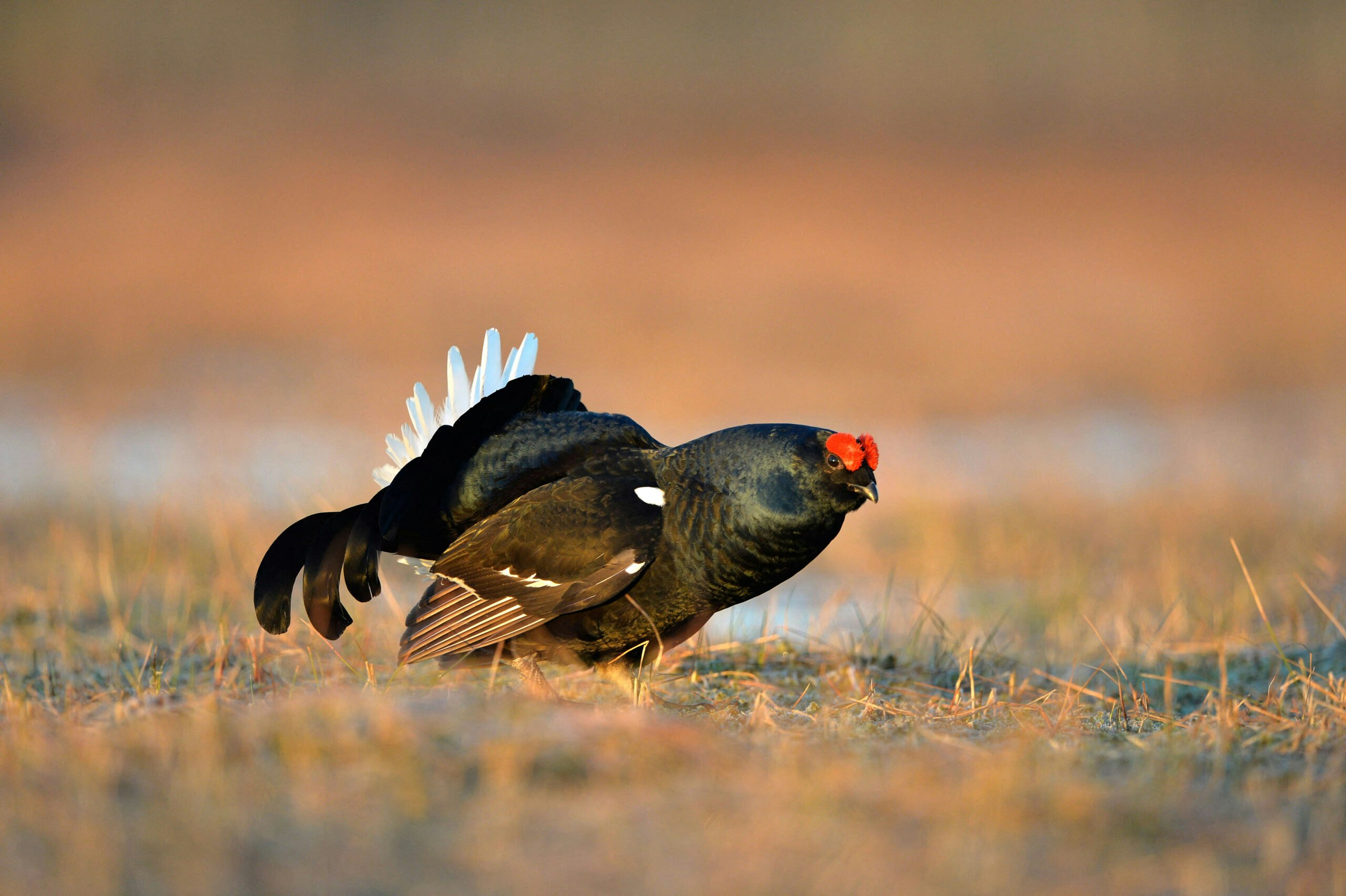
The Peak District became the southern boundary for the species, until the decline took the bird away, with the last individuals seen at Matlock Moor in the 1970s. Derwent Dale lost its grouse in 1992, and the famous Swallow Moss – the long-term site for watching a lek for southern birders – in 2000.
It was this loss that prompted Seven Trent Water to fund a reintroduction. A pilot scheme was tried in 2001, releasing four males and four females. Birds survived into the spring of 2002, although many were predated, but two remaining females went on to breed and produced six young. This was the green light to push for a larger reintroduction, with a maximum of 200 birds being released from 2003 to its close in 2009.
This project suggested that Black Grouse have very broad habitat requirements, and adults will survive and feed in almost any upland landscape. However, crucially for breeding success, a site must be chosen giving priority to the hens’ requirements.
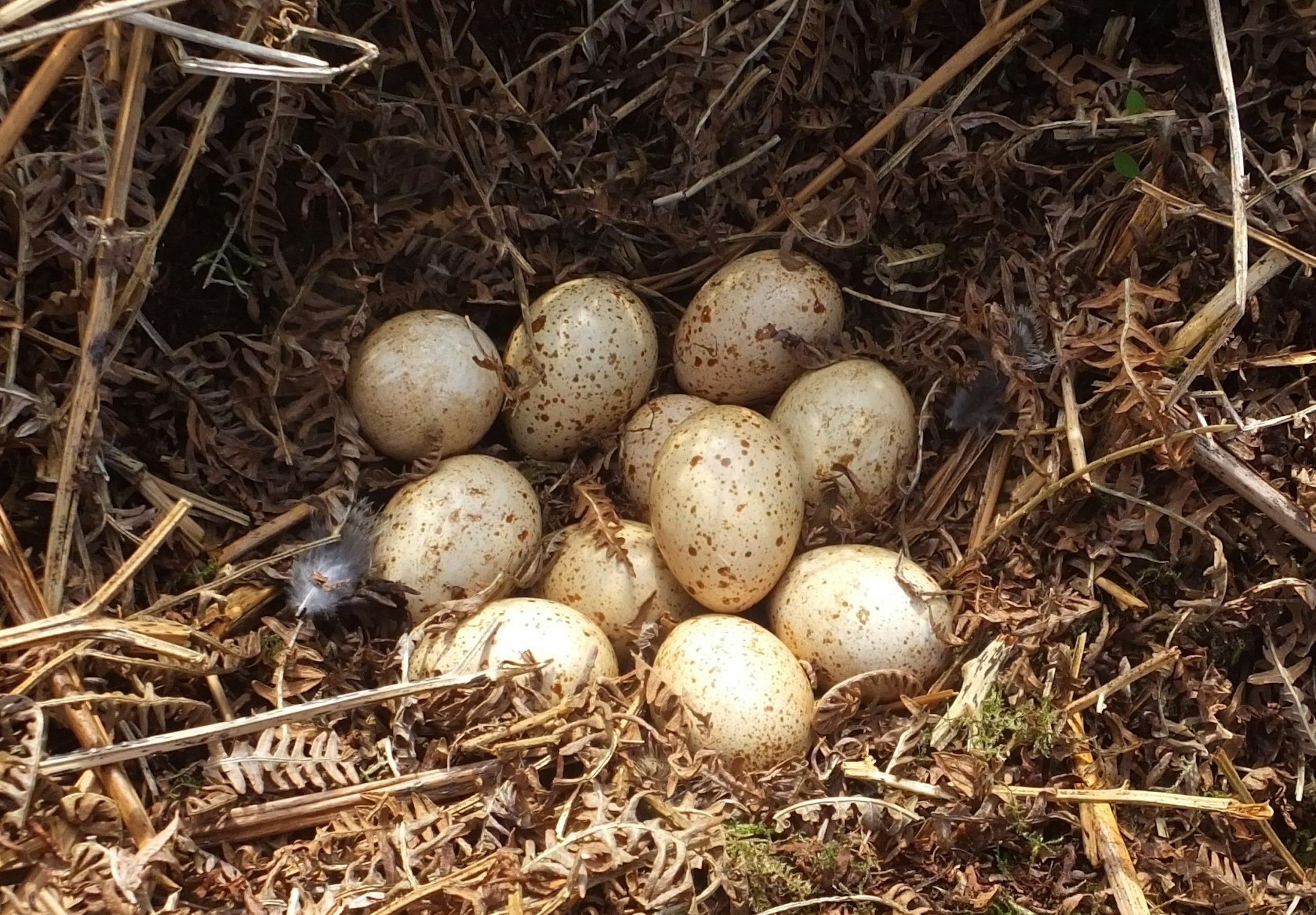
The greyhen must have a quiet undisturbed area from mid April to August, with habitats of mixed vegetation and nesting cover such as heather, bilberry, rushes, grass, herbs etc., all of them insect-rich to feed and rear the young. Birds prefer breeding areas within 500m of some type of woodland or scrub. Habitats must be open-canopied, with vegetation between 20-50cm in height, thereby enabling the females to forage and raise their young in secrecy. For leks, the males will always find a suitable area of short vegetation on which to display.
The area that was picked was in the ‘Dark Peak’ – the Upper Derwent Valley, which had a maximum of two million visitors a year. Sadly, predation was the biggest factor of its failure, with 75% of all birds killed by raptors, while dispersion from the release site even saw birds fly into Sheffield, with individuals seen in a garden and on telephone wires!
Another trial was held on the Isle of Arran, where Martin Martin had written in 1703 that you needed a license to kill blackcock on the island. The last sighting had been in 1983, with large scale forestry taking over the preferred habitat, and over-grazing by sheep also having an impact. But 1999 saw the Arran Black Grouse Group formed, which estimated there was still 10,000 hecatres of land suitable for the bird. The scheme lasted from 2007 to 2016, using captive grouse, and the aim was to release an estimated 30 poults per year. Failure to reach this target was due to a lack of success with eggs – 46 hens produced 414 eggs, but only 43 hatched, producing only 11 poults.
England’s current stronghold is found in the North Pennines, where I live. Presently numbers fluctuate between 1,000 to 2,000, depending on the breeding seasons, but the overall estimate for the UK is just under 5,000 cocks. Locally I have around 16 cocks and 12 hens, but the winter of 2010 saw a big influx from neighbouring areas as the valley has many mature birch trees. The maximum count that winter saw 65 cocks and 57 hens, with 16 of those feeding across the valley from the house! Oat fields were planted by the RSPB to help these grouse (as well as many finches and buntings) but sadly these are no longer found.
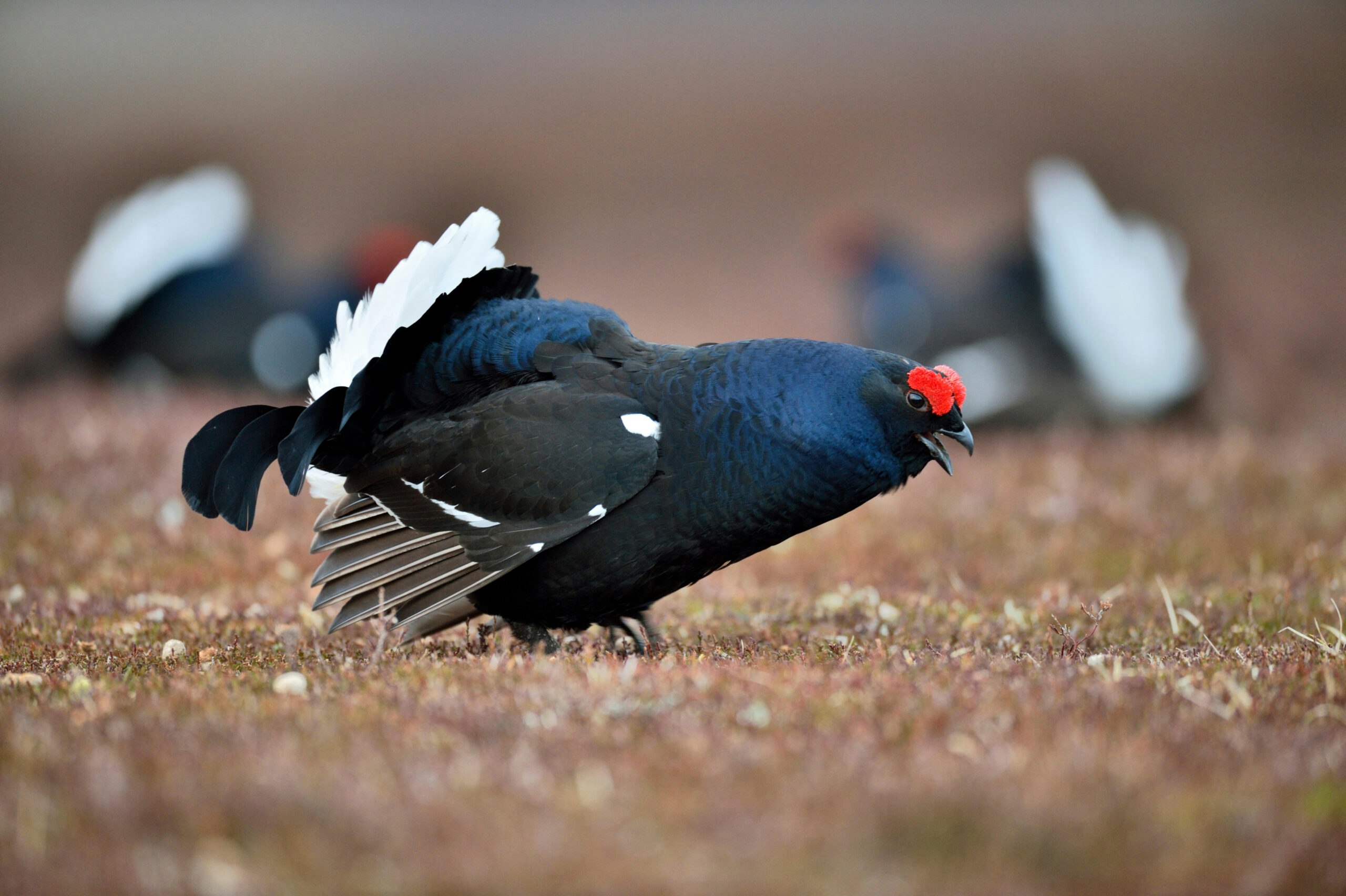
Recent work on these grouse has shown that twice as many males attended leks in areas where gamekeepers are employed and driven Red Grouse shooting was practised. A survey in Northumberland showed that many more bird species benefited from this management, with 10 years of control of predators and 10 years of no control tried. Sadly, both Black Grouse and Grey Partridge went locally extinct at the end of the 10 years of no control.
The same problems are faced in parts of Scotland, with a declining population in the Southern Uplands. The RSPB is hoping to work on habitat management there, with new grants available, while rewilding sites are presently seeing some improvement, but it will be the long-term counts that will tell the full story.
For the future, let’s hope the North Yorkshire translocation method continues to work, and these magnificent birds find new homes where they can expand their numbers.