£849
Reviewed by David Chandler
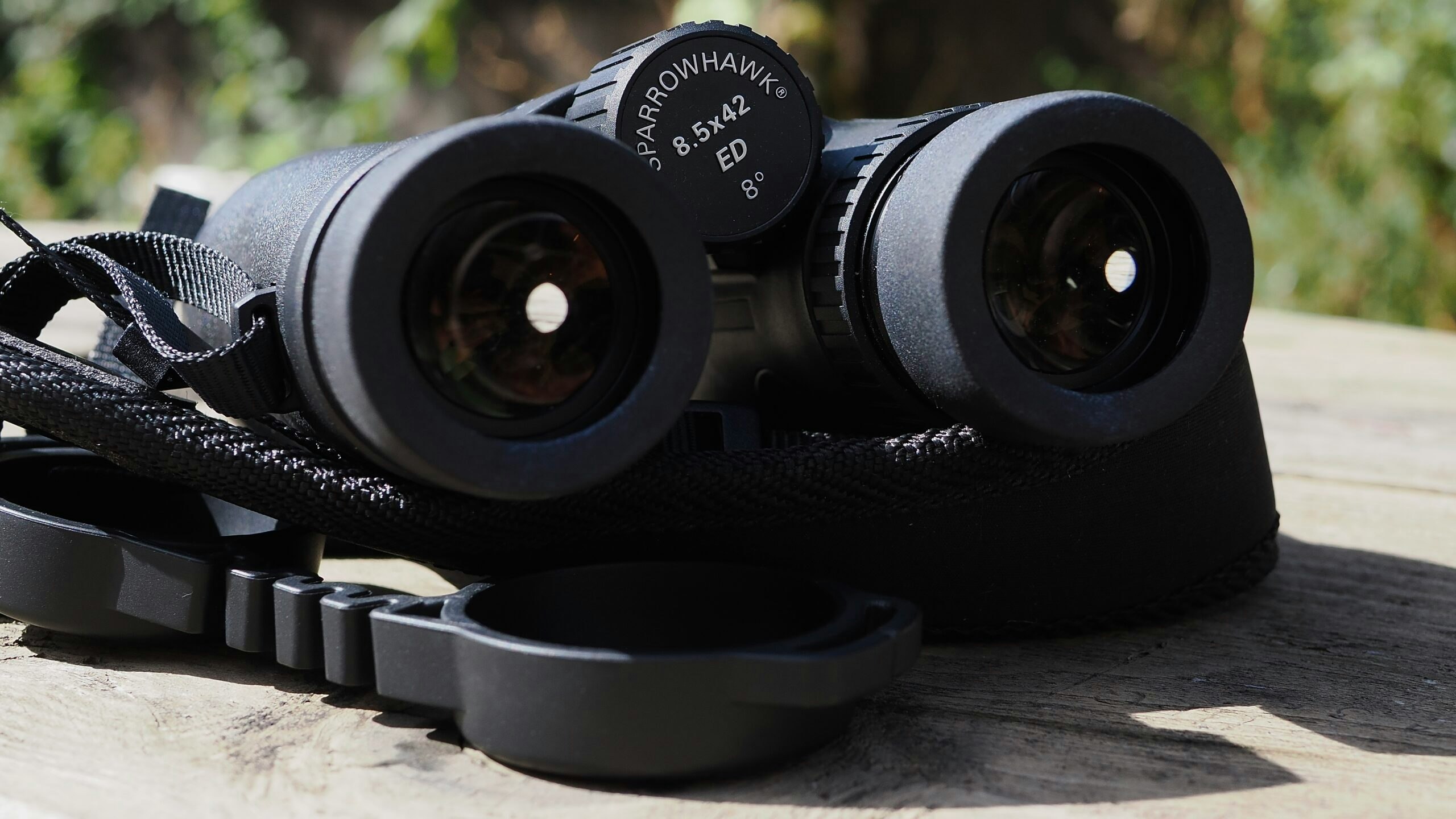
It may not be the biggest bird of prey, but the Sparrowhawk is the top end of the RSPB binocular range. There are two Sparrowhawks, an 8.5x42 and a 10x42(£859). I got to play with the 8.5x.
Looking at and through
Aside from barrels that bulge at the objective end, this binocular looks much like many other binoculars that are out there. It’s not a binocular that draws attention to itself. But look through it rather than at it, and it’s a different story.
The Japanese optics in the Sparrowhawk deliver a very, very good image. It’s clean and neutral with sharpness pretty much edge to edge. It picked out the yellow feet of an in-flight Little Egret about ¼ mile away. I did see a little edge softness when I looked for it – but in real world use, you won’t notice. There was some occasional vignetting, but nothing to get worked up about. Sharpness is excellent, brightness is very good, and while I noticed a smidgeon of colour fringing occasionally, overall, it’s well corrected – I saw none on two soaring Buzzards for example.
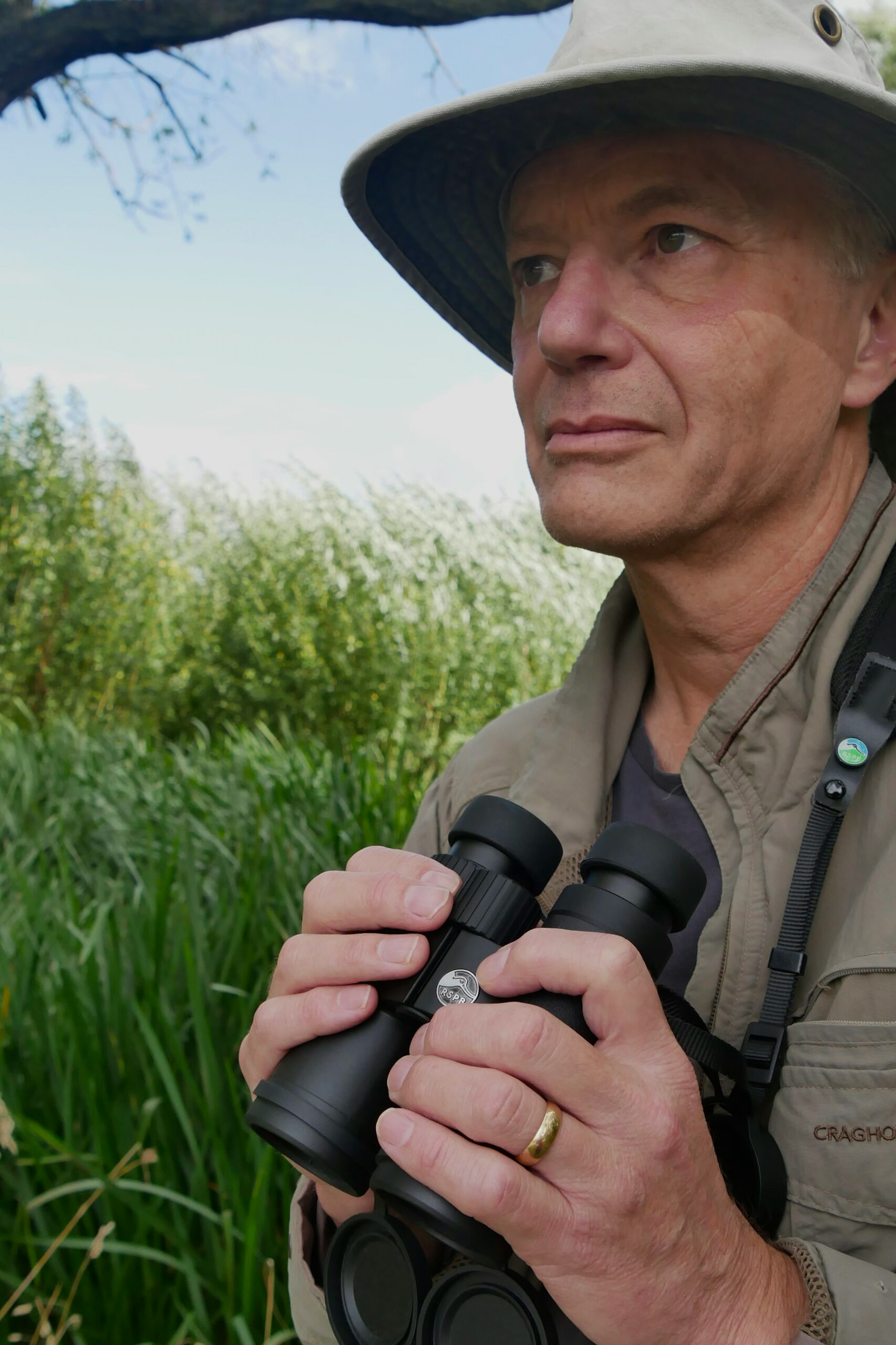
Not only is the view very good, it’s also feels big. The 8⁰/140m@1,000m field of view, with an 8.5x magnification, gives you an apparent field of view of 68⁰, which is comfortably over the European (60⁰) and Japanese (65⁰) thresholds for ‘wide-angle’ qualification. If you’re wondering, you multiply the real field of view (8⁰) by the magnification (8.5x) for an approximation of the apparent field of view – how wide the view feels rather than how wide it actually is.
It's not unusual for a binocular’s quoted close-focus to be wrong – if this is important to you try the binocular before you buy. The 8.5x Sparrowhawk supposedly focuses down to two metres. My tape measure said 1.44m and that’s impressive. It gave me a stunning view of a close-to, male Ruddy Darter.
As the day faded, this Sparrowhawk continued to impress – really impress – I’d rate its low light performance as excellent. With lots of high cloud after a pretty bright day, 44 minutes after sunset, there was a suggestion of colour on a Fox in the open, perhaps 80 metres away. It also coped well viewing against a setting fen sun – conditions that can create unwanted flare/reflections.
The blurb says ‘super bright and crystal clear viewing’. I won’t argue with that. So, it’s very good optically. What about the build quality and handling?
In my hands
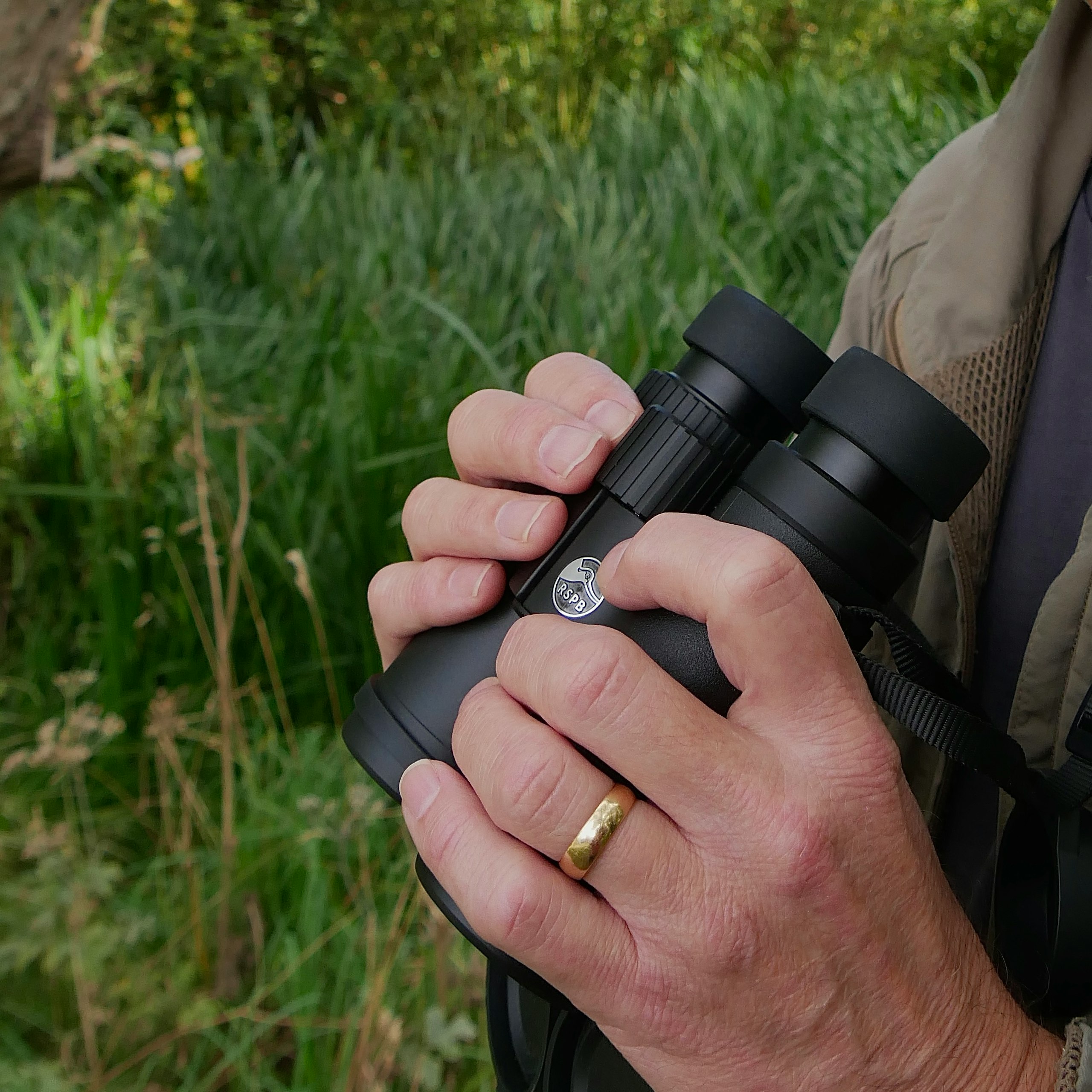
This binocular seems very well put together. It has a ‘robust magnesium body’, is armoured, waterproof and nitrogen-filled. It feels reasonably weighty (my regular binocular weighs just 600g), but at 700g, it’s not heavy for a 42mm binocular. It’s well-balanced and has thumb indents on the underside.
Unusually, the exposed surface of the focusing wheel is metal. That felt a bit odd at first but you get used to it. It’s one finger wide, smooth and reasonably light to operate, with 1 7/8 clockwise turns towards the birds that are further away than you would like. Typical birding needs no more than about 3/8 turn and focusing precision is very good. The dioptre ring pulls up to adjust and pushes down to lock. The rubber-covered eyecups have two intermediate positions, very good mechanics and stayed up in use.
Verdict
This is a high-quality binocular. If you want a full size, versatile binocular (wide-angle, good in low light, good close-focus) at this price point it’s hard to beat. And actually, you might struggle to see much difference in image quality from binoculars that cost a lot more. I think this might be the first time I’ve given a binocular 5/5 for price.
Specs
Length: 125 x 145 x 50mm
Weight: 700g
Field of view: 140m@1000m
Close focus: 2m
Eye relief: 16.7mm
Website: vikingopticalcentres.co.uk; shopping.rspb.org.uk