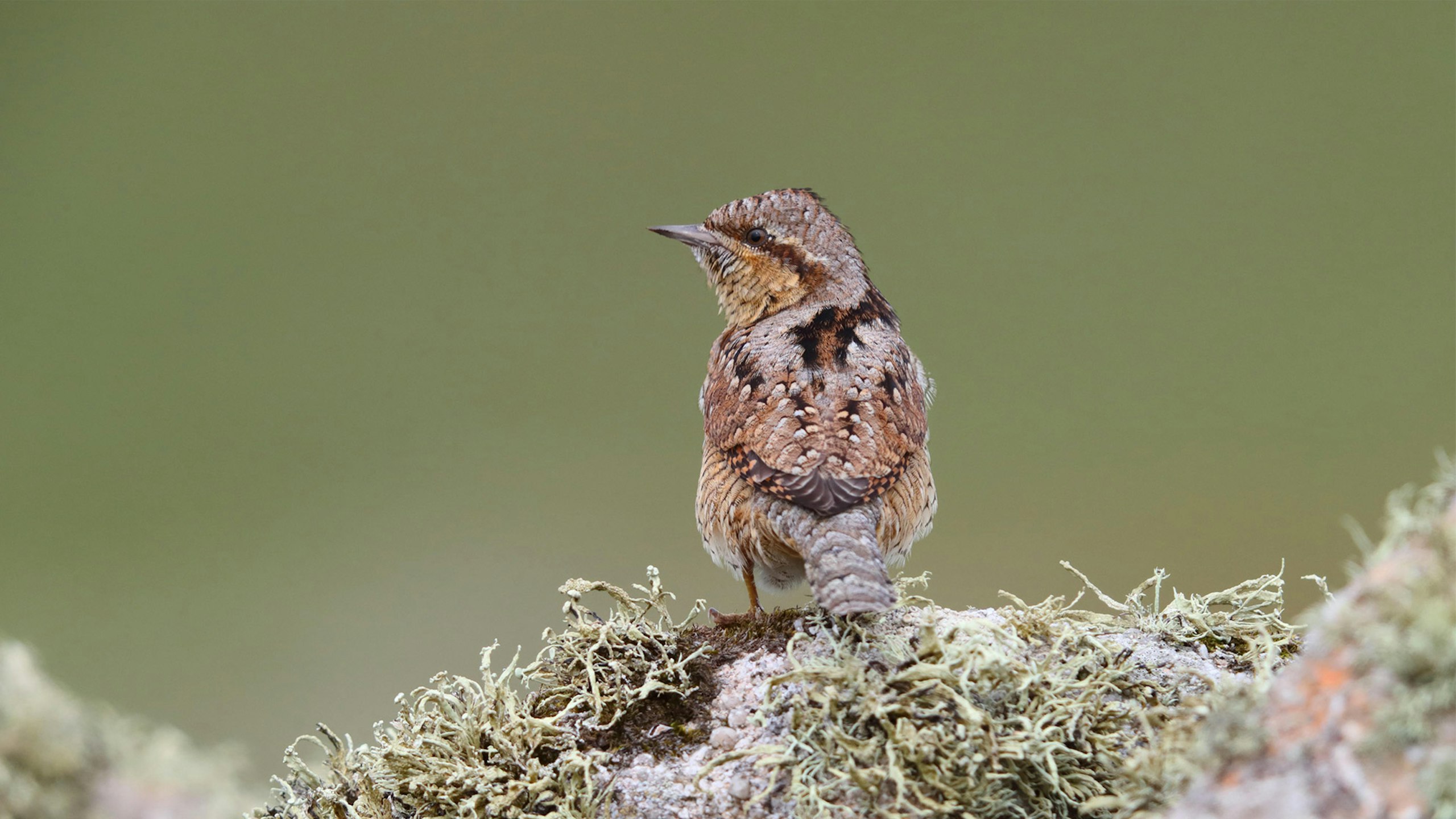
Now lost as a UK breeding bird, this un-woodpecker-like woodpecker is the most curious of characters
It’s autumn, and most of Europe is saying, “See you next year” to one of its oddest birds, the Wryneck, as it heads off to sub-Saharan Africa for the winter. Up until 200 years ago, Britain would have been joining in the chorus, because the Wryneck was a common bird, familiar enough to have been given several folk-names in different parts of the country. There were once thousands of Wrynecks here every year and it bred, for example, in almost every English county; now there no breeding pairs at all. Its appearances are limited to a smattering of autumn migrants drifting over each migration, a mighty and somewhat mysterious fall.
Not everyone weeps for the Wryneck. Its rivals for nest-holes in the open woodlands where it occurred don’t miss its brutalisation. The Wryneck is notorious as a spoiler. Once a pair of Wrynecks have set their hearts on a particular tree-hole, they won’t respect any incumbents and will sometimes enter a battle of wills, for example with Great Tits, that can be fatal on either side. Even if this doesn’t happen, they routinely spoil other nests, removing nest-material and eggs and killing small young inside. They will spoil nests of other Wrynecks and carry on this destructive behaviour even if they have selected for themselves another site entirely. Indeed, they may attempt to vandalise every nest-hole in the vicinity. As a result, it isn’t surprising that smaller birds sometimes mob them.
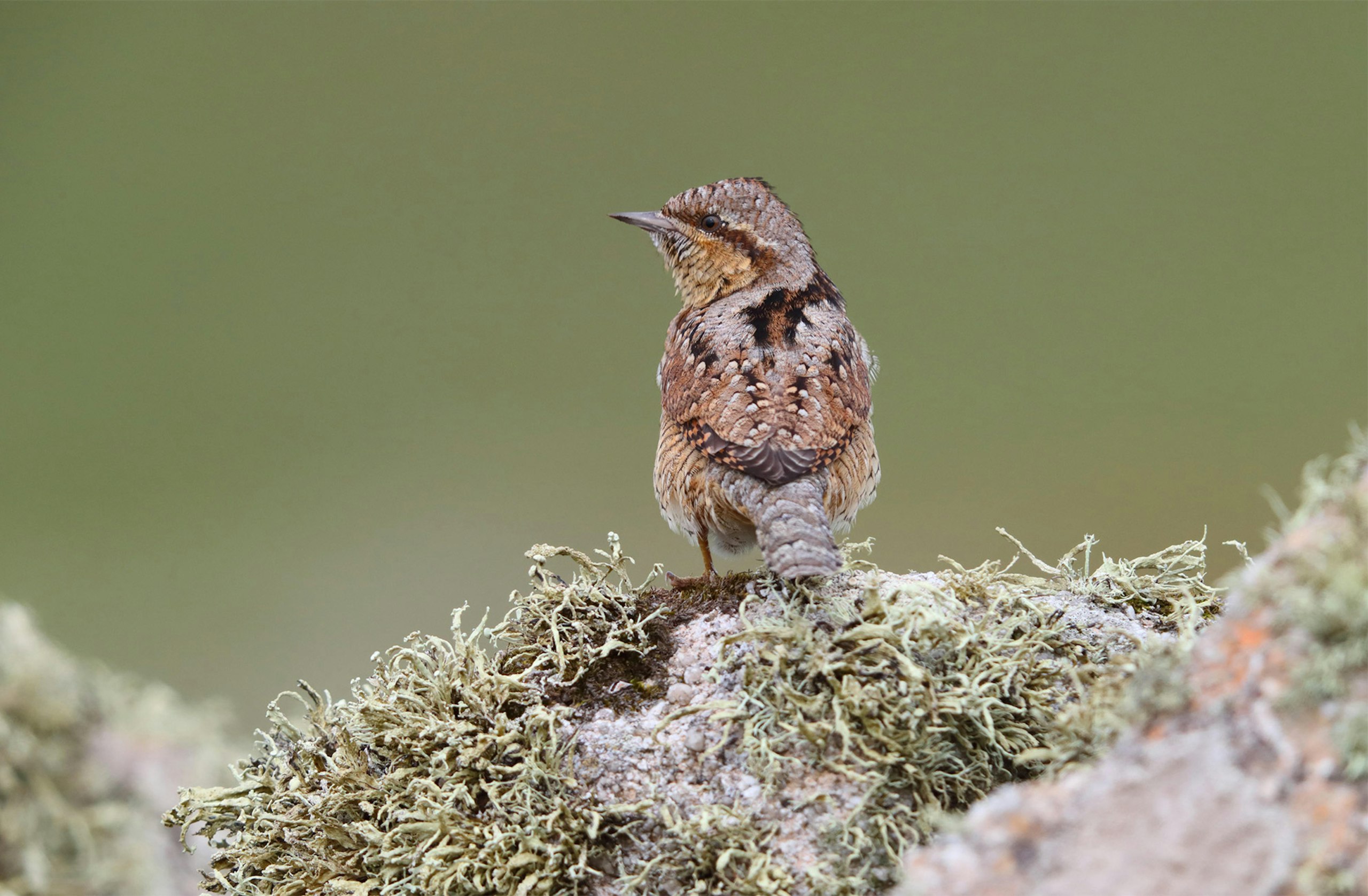
The oddest aspect of this conflict is that the Wryneck is a woodpecker, albeit an aberrant one, a member of the very family that is famous for excavating holes in trees, a resource eventually used by other birds. However, the Wryneck is a very un-woodpecker-like woodpecker. It doesn’t drum and it cannot excavate, although it does indulge in the unexplained habit of sometimes pecking loudly while investigating inside a nest hole. It doesn’t look much like a woodpecker, either, decorated instead with a wondrous pattern of cryptic brown and grey markings that are so tasteful that they wouldn’t look out of place in the Sistine Chapel. The Wryneck’s tail is long and soft, utterly useless for climbing vertically up tree trunks, so the Wryneck typically perches in a way akin to most other small birds. Its bill is short and very pointed, without the complete feather covering over the nostrils seen in most woodpeckers. The skull lacks any strengthening or shock-absorbing adaptations of the kind seen in the chisellers of the family.
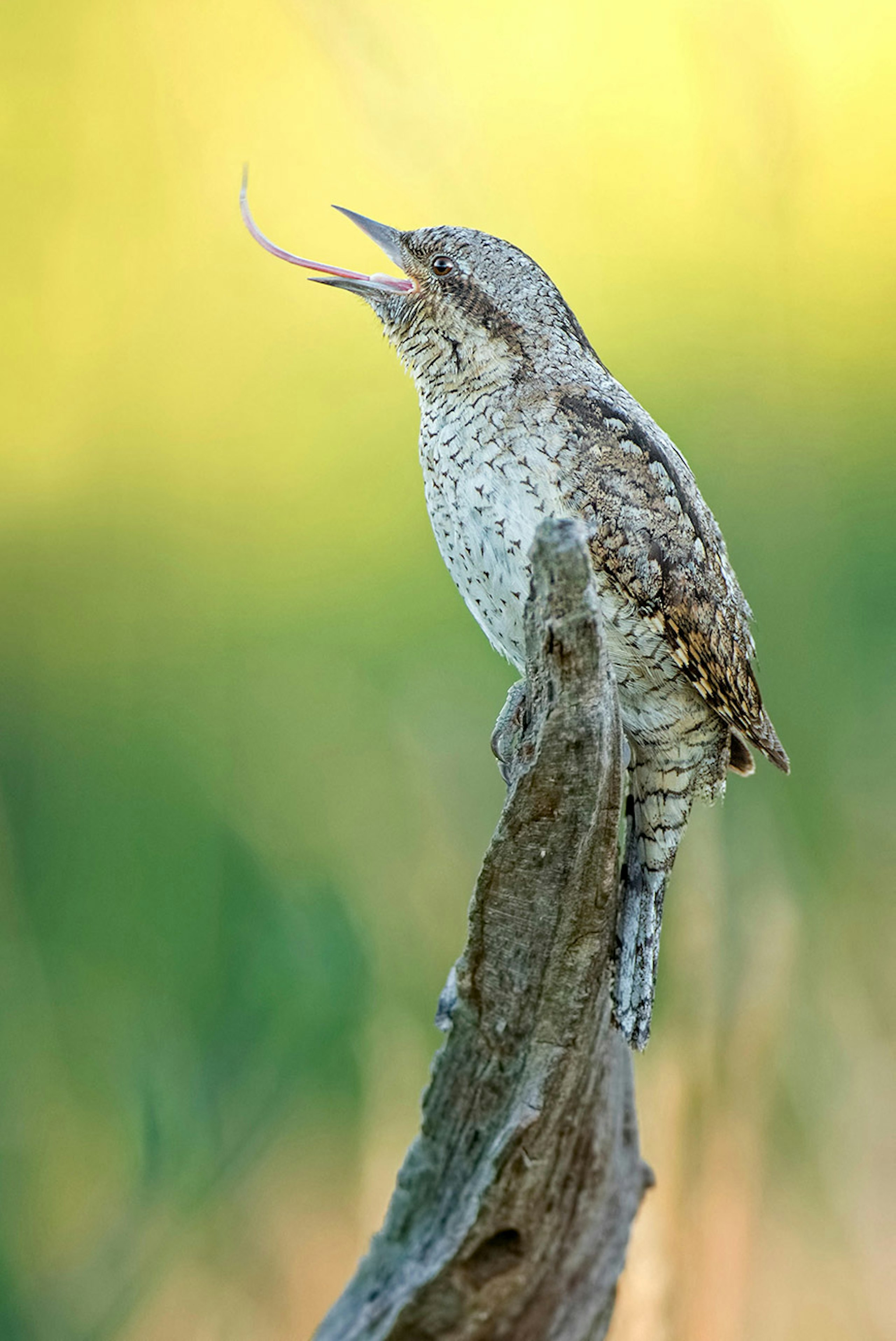
By now you might be wondering what makes the Wryneck a woodpecker at all. Well, DNA confirms the connection, suggesting that Wrynecks diverged from the rest of the family about 22.5 million years ago. Wrynecks share the woodpeckers’ famous zygodactyl arrangement of the feet – two toes forward, two back. In terms of what you and I might experience, the flight is typically undulating and the advertising call – uttered equally by male and female – may recall the Green Woodpecker. And if you are lucky enough to see a Wryneck feeding, you might spot something else – the signature long, sticky tongue, which extends well beyond the bill tip, and flicks in and out, like that of a snake.
The tongue doesn’t have brush-like bristles, as do some woodpecker tongues, but it is well served with large salivary glands that endow it with stickiness, meaning that small prey items naturally adhere to it. And that is priceless for lapping up the Wryneck’s primary food, ants. In many ways, its feeding methods mirror that of another ant-specialist, the Green Woodpecker – foraging on the ground, often remaining in place for some time, and breaking open ant nests. However, the Wryneck does not dig in the same way, and its diet is also broader. Green Woodpeckers are true specialists (ants make up more than 80% of the diet), while Wrynecks take flies, beetles and spiders, even tadpoles, occasionally. Even so, one analysis of Wryneck poo found 800 ants in 1.5 cubic centimetres of excreta. Incidentally, Wrynecks will also occasionally bring birds’ eggs to the nest for the young, further straining the fractious relationship with Great Tits and other hole nesters.
The Wryneck’s love of small insects – which extends to what it feeds to its young, namely, pellets of ant bodies – belies another decidedly bizarre piece of behaviour which has been consistently recorded. This bird brings substantial numbers of inedible stray, often shiny objects to the nest. These can include stones, pieces of glass, metal, plastics, bones and shells; one study found that the average nest contained 37 items, with as many as 200 recorded. None of this is nest material – most items are gathered as the chicks are growing up – and none seems to be provision, either. It has been suggested that the adults simply bring in things by mistake!
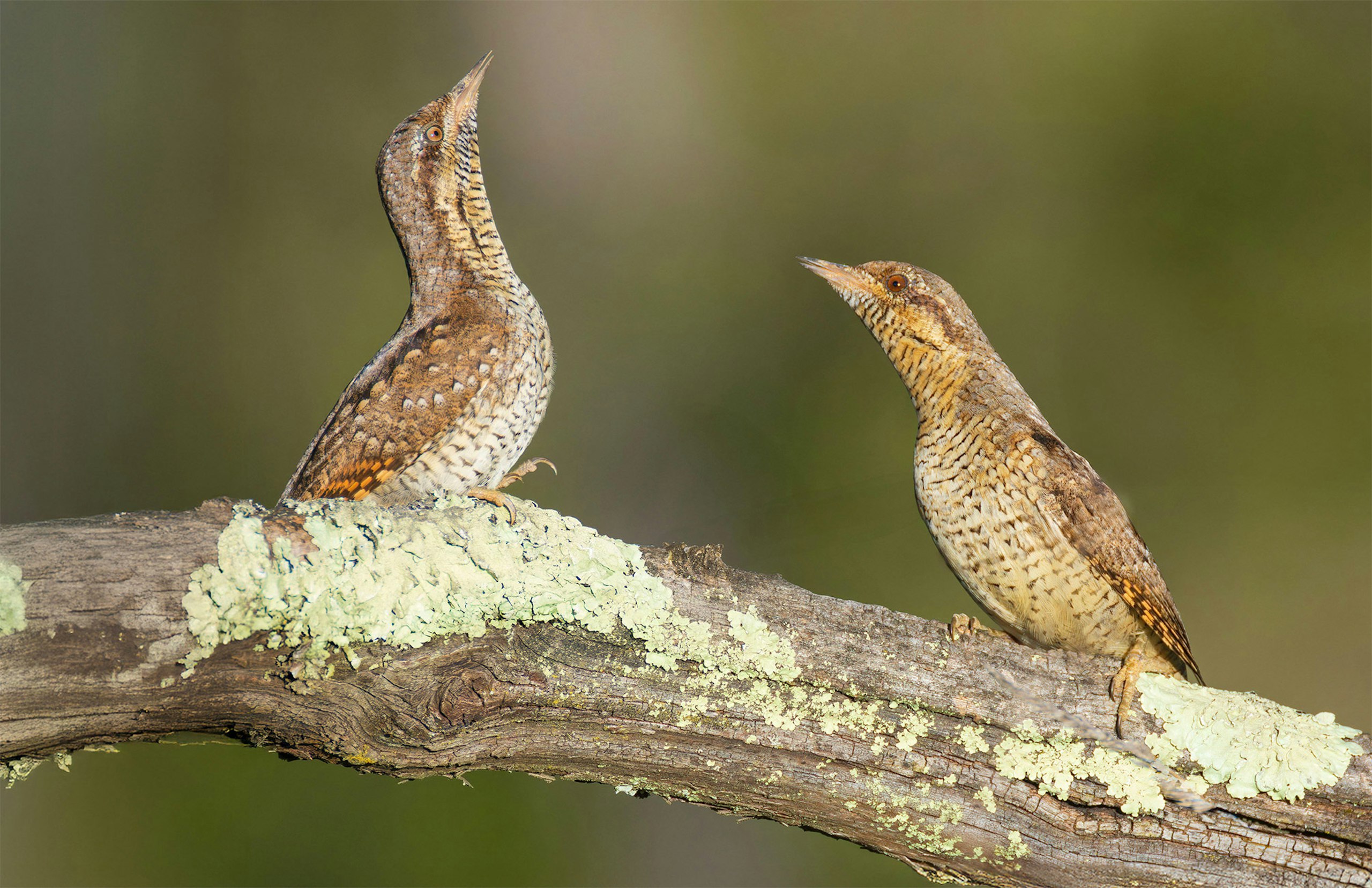
There is much to intrigue us among Wryneck nest behaviour. It is, for one thing, one of the few woodpeckers in which courtship-feeding occurs – the male brings food to deliver to the female during the early nesting period. Wrynecks are also unusual – as are all woodpeckers – for having completely naked hatchlings, completely lacking any down. When very young, Wryneck chicks, of which there are 7-10 per brood, lie in a so-called ‘warmth pyramid’. Resting on their heels, they cosy up belly to belly, with their necks resting on their nest-neighbour’s shoulders. They practise this for up to 14 days from hatching, during which time both sexes brood in shifts.
Perhaps the most famous Wryneck behaviour occurs, however, when the nest is threatened by a potential predator. This is when the Wryneck lives up to its name by lifting its bill almost to the vertical and rotating its head and neck back and forth with a very deliberate action. At the same time, the bird might also make hissing sounds, leading to the very logical conclusion that the whole performance is to mimic a snake. The head-swaying is both strange and unsettling and presumably highly effective. You can see a version of it in many online videos where people have caught the birds for ringing.
The name Wryneck has been used since at least 1585, but the bird’s behaviour has been known since ancient times. In the ancient Greek world, unfortunate birds were tied crosswise to a wheel known as an iynx, which was then rotated, with the bird presumably rotating its head in desperation. This was a charm to pull a desired lover into somebody’s orbit, and it was used in sorcery into Medieval times, including in Britain. The bird’s scientific name, Jynx torquilla, reflects this practice, the torquilla meaning ‘twisting’.
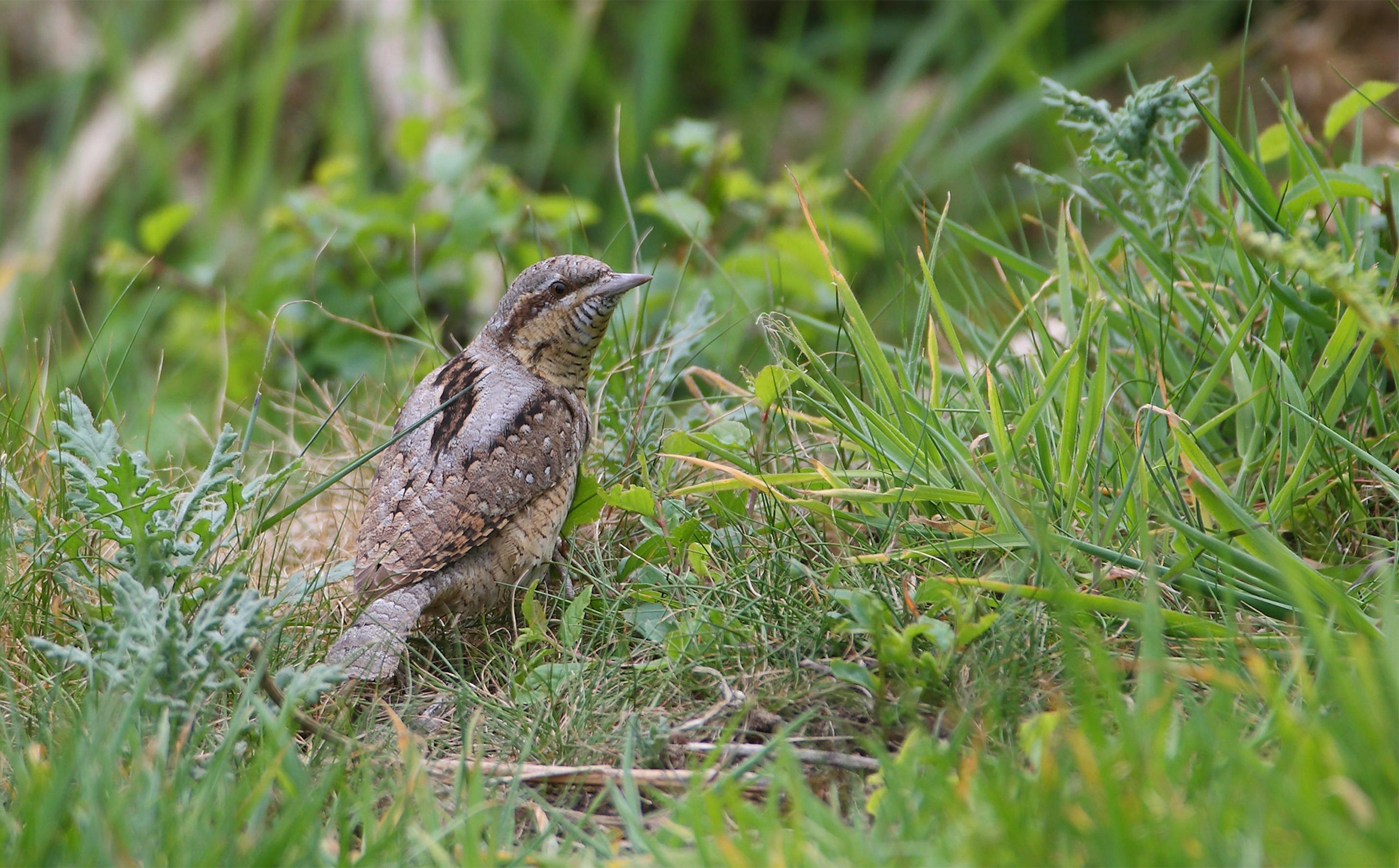
Appalling it may be, but the presence of the Wryneck in English folklore confirms the bird’s sheer familiarity in the country long ago and asks the question as to why this species has been so comprehensively lost. The decline began well before many other modern bird misfortunes and is mirrored in much of the westernmost parts of the bird’s European range. Agricultural intensification, pesticide use and the loss of orchards and ant-filled grasslands have all been suggested as reasons, and all have merit. Ironically, writing in the summer of 2026, another suggestion is that Britain simply became a little too wet for this bird. Certainly, there is likely to be a climatic factor.
Whatever the reason, it seems that, in Britain at least, this wonderfully enigmatic bird was jinxed.